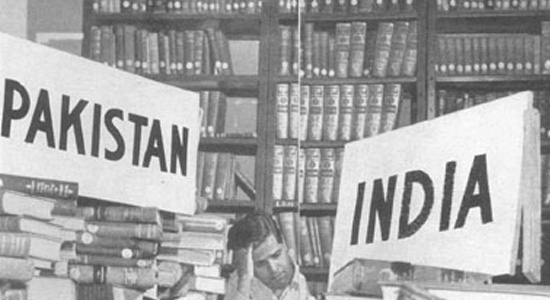
 There are times when aesthetics and humanism take the upper hand over all the material gains, power and pelf in life. Few moments of awakening, recollection, remorse and helplessness inform about the futility of worldly pleasures; we feel sorry for a wrong which was done by us and others; we comprehend that hellish situations could have been easily corrected provided the bloated egos were softened for the sake of next generations, for the sake of history; when we feel there is still some scope for reparation, redress and redeeming. And I felt that last night when I attended an event conducted by Sufi Singer Sonam Kalra at ‘India Habitat Centre,’ Lodhi Road, New Delhi.
It was an excellent presentation narrating the stories of ‘India-Pakistan Partition’ supported by Sonam’s mesmerizing rendition, mellifluous music and videos. The graceful lady, a Sikh by birth sings gospel numbers, Sufi epics of Waris Shah, Bhullay Shah and Kabir. Ghazals of Faiz become a real treat and she says: ‘I work with a keyboard player and guitarist who are Christian, my accompanists on the sarangi and tabla are Muslim, my flautist and percussionist are Hindu; this is a testament that when in matters of faith and music, religion is not relevant.’
According to Sonam Kalra, when India was partitioned, my great grandfather’s family took a lot of people to protect them because they had a large estate. But one day he called his two youngest daughters and said, ‘I’ve a favour to ask you. If the mob comes, if the mob overpowers us, I will shoot you. But promise me that you won’t cry when I do, for it will break my heart.’ Kalra’s family has its root in Punjab that is now a part of Pakistan.
On August 19, 2016, she revisited the event that changed the life of 14 million people that time. And she was inspired for this show when during a cricket match, she saw a man at Indian-Pakistani border carrying a child on his shoulders. The child held a banner on which it was scribbled – “Laali ankhiyan di dasdi hai, roya assi vi.” It could be transliterated into – “The redness of your eyes shows both have cried.” Inspired with these two lines of Ustad Daman, the Sufi-Singer-Icon worked for months to create a scintillating thoughtful evening that includes music, installation art, real life narrative of people who were displaced by partition.
The reading of narration effectively is itself a great art and it was performed in superb way by actor Salima Raza. The greater stories she narrated were very much conforming the style of Raza Mohiuddin. She declaimed Urdu poems, short comments and accounts of sufferers.
Karla innocent wish is worth reading both sides of border:
“I hope that in revisiting these stories through music, we will be able to empathise, ponder and realize the way forward. Hopefully a way of peaceful co-existence based on shared grief, a shared loss, a shared history and a shared love.”
Inside, it was so touching and fascinating to hear the suppressed sobs and often cries that were echoed in the darkness of IHC auditorium from the crowd that was a cocktail of all Indians. At the end, the people were out from the hall with pain and sorrow suffused on their faces. They were spilling on the ‘India Habitat’ lawns wiping their tears.
