Narco tests: The Rights and Wrongs

We have seen the futility of these test made in Arushi Murder Case. According to some experts – persons who have been administered these chemicals can often repeat the interrogators’ words and cues or freely fantasize.

On May 6 th May, 2010 in an article published on Merinews, citizen journalist Subhash Chandra has written as following:

Gautam Swarup of “Nalsar University of Hyderabad” argues In his paper : “The right against Self Incrimination when it applies is an ABSOLUTE RIGHT and is subject to no exception.”

A very fine line has to be drawn to limit the power of State in attempting to acquire such incriminating confessions and prevent abuse of its undisputed power in course of the same.

The contention here is that torturing of a person to extract information from him has been restored to by law enforcement agencies as a convenient, fast and direct method of investigation to bypass the expensive and arduous process of lengthy investigation.

We have accepted this mode of investigation as a way of life as long as the accused is a weak non-entity and a petty criminal. Now, as the new technologies like narco-analysis, brain-mapping, and polygraph tests are making their way into scientific investigations, both the criminals or non-criminals, all are compelled to loosen their tongue during interrogation.

Before the recent Supreme Court judgment it was becoming a fashion to extract the information Chemically without the subjects explicit consent.

Narco Test has acquired popularity off late. Lie Detection and Polygraph Test serial “Sach ka Samna” had put the Reality T.V. shows in India on fire. The Narco-Analysis test is conducted by injecting three grams of sodium pentothal dissolved in water. It is designed to push the suspect towards a hypnotic twilight state where they are questioned several times over to sort out the ambiguities.

It is interesting to know that confessions elicited out through these methods are not admissible as evidence in court.

We have seen the futility of these test made in Arushi Murder Case. According to some experts – persons who have been administered these chemicals can often repeat the interrogators’ words and cues or freely fantasize.

It is a general view that no matter how much more sophisticated the technology used now, it is still a coercive and manipulative investigation tactic, and one that has been rightly regulated by our courts.

Naim Naqvi

Naim Naqvi

Did his graduation in Science discipline from AMU in 1972-73. He was Secretary of University Ali Society in 1970 and M.M. Hall Literary Society in early 70 's and member of Tayyabji Literary Society. Did his Diploma in Bakery Administration from HTT College Oxford Street London in 1987. Worked with National Herald - Delhi, Blitz - Bombay as Trainee Journalist and in Production Department with 'Naya Sansar Pictures' of Khwaja Ahmed Abbas at Bombay in early 70's. Traveled for study and training purposes to Germany, U.K., Switzerland, France, Dubai, Oman, AbuDhabi, Bahrain and Philepines.

More Posts

The lasting appeal of the rose

The Rose

The Rose

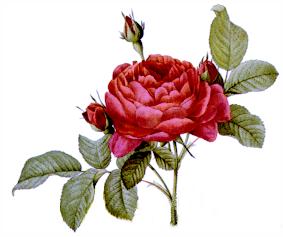
The rose is a perennial flower shrub or vine of the genus rosa. It belongs to the family rosaceae, that contains over 100 species and comes in a variety of colours. The rose is the best presentation that a lover can make to his / her loved one.

I CAN still vividly recollect the rose bud tucked delicately in the third button of Prime Minister Nehru’s sherwani. I can still remember Dr Zakir Hussain enjoying the stroll on the copses of Jamia Millia and often sitting near the rose shrubs admiring the beauty of the king of flowers – the rose.

In today’s world which is permeated with hatred, deceit, immoral politics, deception and ‘Sach Ka Samna’s, we have forgotten to listen to the melodies of the koyel sitting on the jamun tree; we have forgotten to admire the golden showers of the amaltas in our backyard that makes summers beautiful and the tea rose shrub we had purchased when we last visited the ‘Garden of Five Senses’ at Mehrauli. We have become indifferent to the earthen jar in which we had put the cute plant and placed it at a vantage point near the window and which now produces a few rose buds despite our neglect.

Let us forget all about our vice and talk about beauty today. As some poet had said – a flower that blooms for just a day is better than oak tree that stands for a hundred years and fails to provide even proper shade. Just look at a blooming rose and you forget, for a moment, all your worries. A rose is a perennial flower shrub or vine of the genus rosa. It belongs to the family rosaceae, that has over 100 species and comes in a variety of colours. Their species are average shrubs and climbers which can reach heights of up to 20m. Their stems are usually armed with sharp thorns. Thorns are modified branches or stems, whereas these sharp protrusions on a rose are modified epidermal tissues (prickles). Most rose species are native to Asia, with smaller numbers of species native to Europe, North America and Northwest Africa. Species from different parts of the world easily hybridise, which has given rise to the many types of garden roses.

The name rose comes from French, itself from Latin, rosa, which was borrowed from Oscan, from Greek rhodion (Aeolic wrodion), from the old Persian word ‘flower’. The steam-extracted essential oil from rose flowers has been used in perfumes for centuries. Rose water, made from the rose oil, is widely used in India, Iran and Arab countries in many cuisine. Selective rose petals are dried and made into marmalade popularly known as gulqand. Dried petals are brewed for tea, primarily for their high vitamin C content.

The rose is the best presentation that a lover could give to his/her loved one. Everyone, who has a heart, has some fond memories of roses. As one Hindi poet said – “Mujhe tod lena ban mali dena us path par tu phek, matra bhoomi par paran charrhane jis per jayen veer anek.” They say- “Beauty lies in the eyes of beholder.” The rose doesn’t need any beholder as the English poet Sarah Wilson Middleton wrote in the poem the ‘The wayside rose’:
Out on the old highway it grows,

Naim Naqvi

Naim Naqvi

Did his graduation in Science discipline from AMU in 1972-73. He was Secretary of University Ali Society in 1970 and M.M. Hall Literary Society in early 70 's and member of Tayyabji Literary Society. Did his Diploma in Bakery Administration from HTT College Oxford Street London in 1987. Worked with National Herald - Delhi, Blitz - Bombay as Trainee Journalist and in Production Department with 'Naya Sansar Pictures' of Khwaja Ahmed Abbas at Bombay in early 70's. Traveled for study and training purposes to Germany, U.K., Switzerland, France, Dubai, Oman, AbuDhabi, Bahrain and Philepines.

More Posts