The formidable clout of Israel on American psyche

“There is always someone having a much worse day than you.” It is cliche that is often used to console the disturbed minds. Many Indians were shocked when Prime Minister Narendra Modi deliberately ignored to mention about the previous illustrious prime minsters of India like Nehru and Indira Gandhi.

They were wondering about the historical slight of RSS stalwarts. Unfortunately, in this new world, the politicians and even the common man doesn’t bother about courtesy, politeness, acknowledgements or thanks. We are becoming selective in every sphere of life. However, we’re not alone in this ungrateful theatre.

Honouring the soldiers is a universal tradition and India or America are no exception. We revere and admire our men and women who serve in armed forces especially when when they faced death on duty. We eulogise their sacrifices and we don’t discriminate among them.

However, I was shocked when I read the story of the 294 US Navy technical staff members who had been viciously attacked by Israeli jets and cruisers on June 8, 1967. They were serving on a US Navy technical research ship that was stationed in international waters north of the Sinai Peninsula.

The USS Liberty stayed afloat despite nearly two hours of strafing and bombing.

The crew held their fire and tried to alert the attackers that they were openly flying a US flag and were not engaged in any military threats. The attack killed 34 crew members, all US citizens and decorated military servicemen. Another 174 were seriously wounded. The attack was launched by America’s “ally” Israel. Ever since, both Israel and its American political defenders have blocked numerous efforts to highlight it.

Ever since, both Israel and its American political defenders have put every effort to balck-out this news.

In the so-called civilized nation, instead of being honouring these martyrs at the Veteran’s Day ceremonies or during national holidays, these poor victims are demonized and denounced as “anti-Semites” simply because they have challenged Israel’s propaganda, which asserts falsely that it made a mistake.

Sometime back, in a city in Florida called Palm Coast, it was suggested that a small plaque in the “Heroes Park” should be installed commemorating those of the Liberty victims. The park district approved the plaque, especially since one of the Liberty survivors, Ernest Gallo, has lived in Palm Coast for 15 years.

Communities with veterans living among them are usually proud to showcase them. Yet for some unexplained reasons, the city council voted to block placement of the plaque at “Heroes Park.” Politicians in this Florida community decided that these veterans did not deserve recognition.

In Europe the people have begun to realize the brutality of Israel against the helpless Palestinians. New voices are being raised there in favour of voiceless inhabitants of the Holy Land of Prophets. It is so sad that Israel holds a strong fist at the minds of Americans that they care two hoots about the plight of Palestine. They are too funky about Israel. The world has yet to change for better.

Naim Naqvi

Naim Naqvi

Did his graduation in Science discipline from AMU in 1972-73. He was Secretary of University Ali Society in 1970 and M.M. Hall Literary Society in early 70 's and member of Tayyabji Literary Society. Did his Diploma in Bakery Administration from HTT College Oxford Street London in 1987. Worked with National Herald - Delhi, Blitz - Bombay as Trainee Journalist and in Production Department with 'Naya Sansar Pictures' of Khwaja Ahmed Abbas at Bombay in early 70's. Traveled for study and training purposes to Germany, U.K., Switzerland, France, Dubai, Oman, AbuDhabi, Bahrain and Philepines.

More Posts

Mohammed Rafi – A Legend of Contralto

‘Ek Dil ke Tukde Hazar Hue’ from the Suraiya-Rehman starrer Pyar ki Jeet (1948) is a good example of that indelible mark of GM. ‘Dulari’s’ famous song Suhani Raat Dhal Chuki gave his career a flying start with superb music by Naushad.

It would be no exaggeration to state that Mohammed Rafi was the most versatile singer in the history of Indian Cinema. He was capable to sing for anyone in any style. Rafi proved his versatility by singing for Dilip Kumar, Dev Anand, Shammi Kapoor, Rajendra Kumar, Johnny Walker, Sunil Dutt, Biswajeet, Joy Mukherjee, Dharmendra, Shashi Kapoor,  Raaj Kumar and Amitabh; and many more.

Can any music lover forget  the classical “ Madhuban Mein Radhika Nachi Re ?” Some believe that ‘Oh Duniya Ke Rakhwale..Sun Dard Bharey” is the greatest song of Indian films till date.

Rafi was born in Kotla Sultan village, about 30 kms from Amritsar in Punjab on December 24, 1924. He died on July 31, 1980. Rafi was a very simple man, who would talk straight from his heart and used to help everyone in need. Rafi moved to Lahore at the unripe age of 14.

In Lahore, he studied music under Khan Abdul Waheed Khan, Jeevanlal Matto and Ghulam Ali Khan. He was introduced to Radio Lahore by composer Feroz Nizami and made his film debut as playback singer in the Punjabi film Gul Baloch (1944) singing for  composer Shyam Sunder.

In 1944, Rafi landed in Mumbai (then Bombay). His  first  break was with Naushad in Pehle Aap (1944). Naushad gave him more chances in Anmol Ghadi (1946), Tera Khilona Toota Balak and in Shah Jehan (1946) where he sang only few lines in a duet with K L Saigal. Only few remember the maestro GM Durrani, whose singing had influenced Rafi.

“Ek Dil ke Tukde Hazar Hue” from the Suraiya-Rehman starrer Pyar ki Jeet (1948) is a good example of that indelible mark of GM.  “Dulari’s” famous song Suhani Raat Dhal Chuki gave his career a flying start with superb music by Naushad.  Thereafter, Rafi never looked back.

However, the first challenge to his singing came in 1971, when his popularity plummeted and Kishore Kumar took over.

He was a great human being as he did never lose his composure in prosperity or in adversity.  He remained humble and soft-spoken through every up and down.

He made a spectacular comeback with the Nasir Hussain musical Hum Kisi se Kum Nahin (1977) and Amar Akbar Anthony in the same year even winning the National Award for Kya Hua Tera Vada for the former. Unfortunately, he had left little time to enjoy the second phase of success. On 31st July,1980, Rafi died of  heart attack.

Rafi has left a vast treasure for every music lover for every occasion. May his soul rest in peace.

Naim Naqvi

Naim Naqvi

Did his graduation in Science discipline from AMU in 1972-73. He was Secretary of University Ali Society in 1970 and M.M. Hall Literary Society in early 70 's and member of Tayyabji Literary Society. Did his Diploma in Bakery Administration from HTT College Oxford Street London in 1987. Worked with National Herald - Delhi, Blitz - Bombay as Trainee Journalist and in Production Department with 'Naya Sansar Pictures' of Khwaja Ahmed Abbas at Bombay in early 70's. Traveled for study and training purposes to Germany, U.K., Switzerland, France, Dubai, Oman, AbuDhabi, Bahrain and Philepines.

More Posts

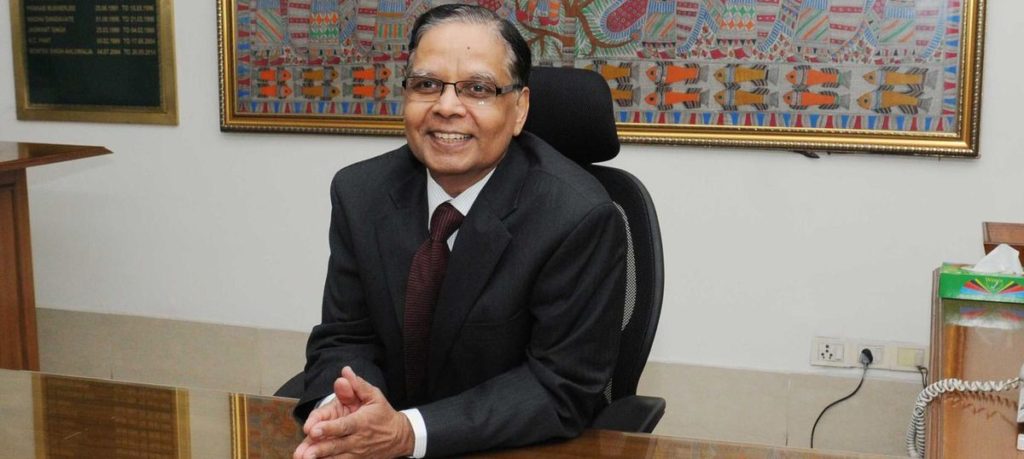
Economist Panagariya – Started with a bang, ending with a thud

The Niti Aayog vice-chairman Arvind Panagariya on Tuesday resigned from his position and said he will return to academia. He said he has written to Prime Minister Narendra Modi to relieve him of his duties by August 31 as he was not getting extension of leave from Columbia University.

In August 2014, PM Modi had announced that the Planning Commission had become redundant, and hand-picked Panagariya, the Jagdish Bhagwati Professor of Indian Political Economy at Columbia University, to head the organisation in its new avatar, the National Institution for Transforming India or NITI Aayog.

In March 2012, Panagariya was honoured with Padma Bhushan, the third highest civilian award the country bestows in any field.

Free-market economist Arvind Panagariya has been one of the most vocal supporters of ‘Gujarat model of growth’. A renowned Indian-American economist, 62-year old Mr Panagariya is known for his market-friendly views and is a close associate of well-known trade economist Jagdish Bhagwati.

The two have often challenged Nobel laureate Amartya Sen to an open debate on Indian economy. Much before Prime Minister Narendra Modi came to the national scene, Mr Panagariya has been voicing his support for the economic policies of the former Gujarat Chief Minister during his tenure in the state.

Mr Panagariya and Mr Bhagwati, in a book co-authored by them and named India’s Trust with Destiny: Debunking Myths that Undermine Progress and Addressing New Challenges’, used ‘Gujarat Model’ as a metaphor for development primarily driven by growth and private entrepreneurship.

An advisor to Vasundhra Raje government in Rajasthan, he was seen as a big supporter of the state’s labour reforms.

And Nobel Laureate Amartya Sen who was challenged by Panagariya for debate had called the Narendra Modi government’s demonetisation move “despotic action that has struck at the root of economy based on trust.”
“It (demonetisation) undermines notes, it undermines bank accounts, it undermines the entire economy of trust.

That is the sense in which it is despotic,” Prof. Sen told to a TV channel. “It’s (demonetisation) a disaster on economy of trust. In the last 20 years, the country has been growing very fast. But it is all based on acceptance of each other’s word. By taking despotic action and saying we had promised but won’t fulfil our promise, you hit at the root of this,” Prof. Sen said.

We don’t don’t really know who was wrong. Did Panagariya not know in advance that he won’t get extension of leave from Columbia University where he was teaching?

Naim Naqvi

Naim Naqvi

Did his graduation in Science discipline from AMU in 1972-73. He was Secretary of University Ali Society in 1970 and M.M. Hall Literary Society in early 70 's and member of Tayyabji Literary Society. Did his Diploma in Bakery Administration from HTT College Oxford Street London in 1987. Worked with National Herald - Delhi, Blitz - Bombay as Trainee Journalist and in Production Department with 'Naya Sansar Pictures' of Khwaja Ahmed Abbas at Bombay in early 70's. Traveled for study and training purposes to Germany, U.K., Switzerland, France, Dubai, Oman, AbuDhabi, Bahrain and Philepines.

More Posts

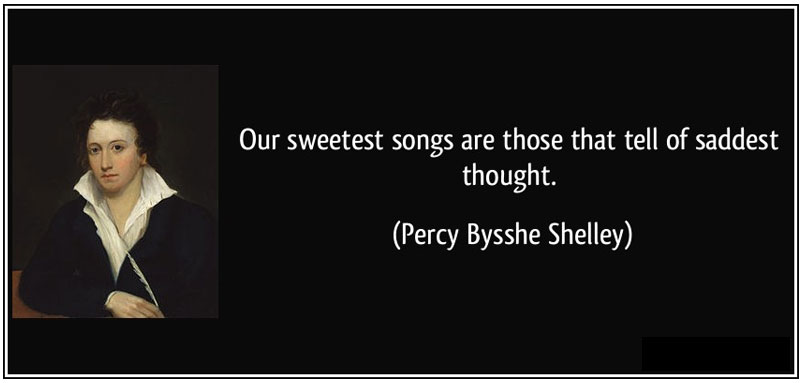
“Our sweetest songs are those of saddest thought.” ― Percy Bysshe Shelley

“From Gini to Ginis” …something near to my life!

In keeping with my resolve not to fiddle with political write-ups for the time being, I’m taking liberty to dig into innocuous nostalgia that might be of some interest to those who keep a tab on history of Mumbai aka Bombay.

I’d landed in Bombay in 1973-74. I can’t recall with surety the exact date. It’s not important. And after a few unsuccessful stints in journalism and film industry elsewhere, I joined the ‘Monginis Restaurant as captain.

This restaurant originally belonged to an Italian family. After changing several hands it landed with the Bohra family that was the pioneer of Super Market Concept in Bombay. They didn’t go for the goodwill of name MONGINI and called their venture – Monginis!

You will find stray hints about ‘Mongini Hotel’ of pre-independence era in Ruth Jhabbawala’s award winning novel ‘Heat and Dust.’ You can also read about social and political understanding and acumen of Amjad Ali in the Urdu novel ‘Panch Loafer’ (Five Scoundrels) written by famous Urdu novelist Krishna Chandra.

The character has great resemblance to the new owner of Mongini and Sheriff of Bombay.

However, what intrigued me to write this peace is a story that has appeared in ‘The Hindu’ daily today.

“A Hundred Years Ago July 30, 1917
Fan accident case: suit dismissed.

At the High Court today (Bombay, July 30) Mr. Justice Kajiji delivered judgment in the suit filed by Mrs. Blanche Edith Catesy, a nurse and midwife, against Messrs Mongini Brothers for the recovery of RS 15,000 as damages and cost.

The fact of the case are briefly as follows: On 4th May 1916, the plaintiff and her daughter went to the defendants’ restaurant to have lunch and when they seated at the table, the waiter switched on a fan overhead. The plaintiff wishing the fan to be stopped…..the waiter switched it off.

The fan immediately fell down with armature and severely injured the plaintiff. She was seen to the hospital where her wounds were attended to. The plaintiff alleged that he was under medical treatment owing to the accident for one month, had to incur expense on that account and was incapacitated from carrying on her profession.

Under the circumstances she claimed Rs 15,000 as damages. The defendants admitted the accident but they did not admit that there had been any injury to her body. They denied that the fall of the fan had been due to any negligence on their part as alleged by the plaintiff.”……end of the quote.

We know that memories always have a way of evolving, becoming either more gentle with the passing years or taking on added dimensions of intensity. At times we may also need to sieve through our memories of people whom we have known in the past to determine their degree of accuracy.

I’ve been attached to Monginis Group for nine years and the mother family for the later 24 years. The parting gift I had received from them was a ‘prototype steal ship’ with nickel coating in glass box with a blue velvety background – nothing written on it.

It still stands singularly on the corner table of my drawing room. It stares at me, at times reminding me of a proverbial ship than ran aground. Often it whispers in ears about the futility of loyalties, trusts and relationship, and finally a thought that does flash like comet – an acceptance of the fate.

Naim Naqvi

Naim Naqvi

Did his graduation in Science discipline from AMU in 1972-73. He was Secretary of University Ali Society in 1970 and M.M. Hall Literary Society in early 70 's and member of Tayyabji Literary Society. Did his Diploma in Bakery Administration from HTT College Oxford Street London in 1987. Worked with National Herald - Delhi, Blitz - Bombay as Trainee Journalist and in Production Department with 'Naya Sansar Pictures' of Khwaja Ahmed Abbas at Bombay in early 70's. Traveled for study and training purposes to Germany, U.K., Switzerland, France, Dubai, Oman, AbuDhabi, Bahrain and Philepines.

More Posts
“Our sweetest songs are those of saddest thought.” ― Percy Bysshe Shelley

“From Gini to Ginis” …something near to my life!

In keeping with my resolve not to fiddle with politics for the time being, I’m taking liberty to dig into innocuous nostalgia that might be of some interest to those who keep a tab on history of Mumbai aka Bombay.

I’d landed in Bombay in 1973-74. I can’t recall with surety the exact date. It’s not important. And after a few unsuccessful stints in journalism and film industry elsewhere, I joined the ‘Monginis Restaurant as captain.

This restaurant originally belonged to an Italian family. After changing several hands it landed with the Bohra family that was the pioneer of Super Market Concept in Bombay. They didn’t go for the goodwill of name MONGINI and called their venture – Monginis!

You will find stray hints about ‘Mongini Hotel’ of pre-independence era in Ruth Jhabbawala’s award winning novel ‘Heat and Dust.’ You can also read about social and political understanding and acumen of Amjad Ali in the Urdu novel ‘Panch Loafer’ (Five Scoundrels) written by famous Urdu novelist Krishna Chandra.

Amjad Ali is not the protagonist or any one of the main characters but a casual entity – a character that has great resemblance to the new owner of Mongini and Sheriff of Bombay.

However, what intrigued me to write this peace is a story that has appeared in ‘The Hindu’ daily today.

“A Hundred Years Ago July 30, 1917
Fan accident case: suit dismissed.

At the High Court today (Bombay, July 30) Mr. Justice Kajiji delivered judgment in the suit filed by Mrs. Blanche Edith Catesy, a nurse and midwife, against Messrs Mongini Brothers for the recovery of RS 15,000 as damages and cost.

The fact of the case are briefly as follows: On 4th May 1916, the plaintiff and her daughter went to the defendants’ restaurant to have lunch and when they seated at the table, the waiter switched on a fan overhead. The plaintiff wishing the fan to be stopped…..the waiter switched it off.

The fan immediately fell down with armature and severely injured the plaintiff. She was seen to the hospital where her wounds were attended to. The plaintiff alleged that he was under medical treatment owing to the accident for one month, had to incur expense on that account and was incapacitated from carrying on her profession.

Under the circumstances she claimed Rs 15,000 as damages. The defendants admitted the accident but they did not admit that there had been any injury to her body. They denied that the fall of the fan had been due to any negligence on their part as alleged by the plaintiff.”……end of the quote.

We know that memories have always a way of evolving, becoming either more gentle with the passing years or taking on added dimensions of intensity. At times we may also need to sieve through our memories of people whom we have known in the past to determine their degree of accuracy.

I’ve been attached to Monginis Group for eleven years and the mother family for the later 24 years. The parting gift I had received from them was a ‘prototype steal ship’ with nickel coating in glass box with a blue velvety background – nothing written on it.

It still stands singularly on the corner table of my drawing room. It stares at me, at times reminding me of a proverbial ship than ran aground. Often it whispers in ears about the futility of loyalties, trusts and relationship, and finally a thought that does flash like comet – an acceptance of the fate.

Naim Naqvi

Naim Naqvi

Did his graduation in Science discipline from AMU in 1972-73. He was Secretary of University Ali Society in 1970 and M.M. Hall Literary Society in early 70 's and member of Tayyabji Literary Society. Did his Diploma in Bakery Administration from HTT College Oxford Street London in 1987. Worked with National Herald - Delhi, Blitz - Bombay as Trainee Journalist and in Production Department with 'Naya Sansar Pictures' of Khwaja Ahmed Abbas at Bombay in early 70's. Traveled for study and training purposes to Germany, U.K., Switzerland, France, Dubai, Oman, AbuDhabi, Bahrain and Philepines.

More Posts
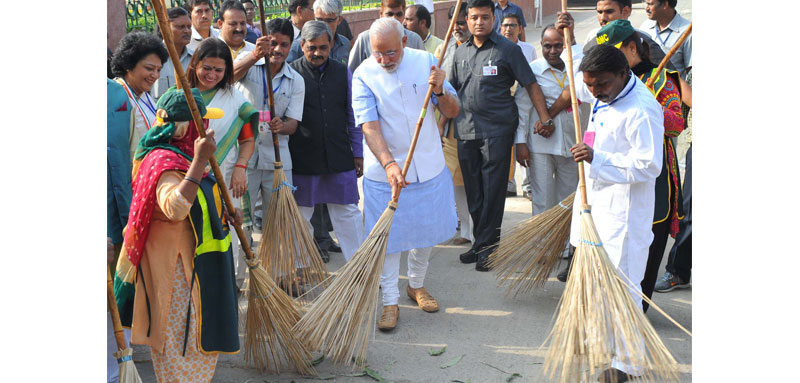
Prime Minister Narendra Modi who for the first time unveiled his Swachh Bharat Abhiyan or Clean India Mission

Coming out of the woods after the routine completion of my morning walk I overheard the interesting conversation ofa gang of merry intended alfresco defecators and the gist of the talk could be summarised as follows:

“The Holy Scriptures say that one of the symptoms of nearness of Doom’s Day would the period when the people would begin to relieve themselves in their homes.”

It implies that open-air defecation is in accordance with the religious practice and all the body excreta should be discarded in the woods or desert quite far and outside, and not inside the homes of towns or residential complexes.

I didn’t believe that. But it spurred in my mind to put on the thinking cap. I went on to explore the veracity of their statement. And I tumbled upon some pioneer work of Prof. Mike Gruso and Dean Spears whose research focuses on developing country health and the regulations.

In their work on Medicare, they had used publicly available and large-scale administrative datasets to investigate up-coding by physicians. Their onerous observations on sanitation provides the first evidence that that open defecation, practiced by a billion people worldwide, generates large infant mortality externalities.

Their work has been featured in the New York Times, NPR, and the Economist magazine. Dean’s research focuses on children’s health and human capital, which these days often means height, sanitation, and social forces in Indian households and villages.

But the pick of the bunch was the Manusmriti line:
Far from his dwelling let him remove urine and excreta
– The Laws of Manu, Chapter 4 verse 151
According to environmentalists, ecologists and medical experts, the issue of open defecation is a commonsense hygiene and health issue.

If you live in or near an area where a lots of people are defecating in the open, the resultant increase in disease due fecal matter getting into water and food sources will lead to infections, higher disease and sickness.

While leaders like Mahatma Gandhi and Vinoba Bhawe might have practiced and preached about hygiene and sanitation that inspired for voluntary cleaning of toilets and bathrooms, it was Prime Minister Narendra Modi who unveiled his Swachh Bharat Abhiyan or Clean India Mission, from the ramparts of the Red Fort on the occasion of India’s Independence Day on 15 August 2014.

I admire NaMo for the new mission. However, nothing much has really changed. When the trains enter the cosmopolitan cities early in the morning, the ugly and unbecoming sight of human beings of all ages and sex relieving unashamedly near the railways tracks welcomes the traveler.

In the small town’s streets and sidewalks choked with rotten belching refuse, the overflowing gutters and sewers, with no signs of being cleared any time soon are all too different from the India that is safely ensconced in fortified luxury esplanades.

Defecation in the open is too common a sight with the poor and the needy of the society’s soft underbelly having no recourse to toilets at home. It is a genuine problem.

Still, I feel, our attitude need gigantic changes. We have to inculcate the sense of cleaning among the less fortunate and we must accept that it is our problem though we might have a toilet attached to every every room of our villa or flat. We must know where the shoe pinches.

Naim Naqvi

Naim Naqvi

Did his graduation in Science discipline from AMU in 1972-73. He was Secretary of University Ali Society in 1970 and M.M. Hall Literary Society in early 70 's and member of Tayyabji Literary Society. Did his Diploma in Bakery Administration from HTT College Oxford Street London in 1987. Worked with National Herald - Delhi, Blitz - Bombay as Trainee Journalist and in Production Department with 'Naya Sansar Pictures' of Khwaja Ahmed Abbas at Bombay in early 70's. Traveled for study and training purposes to Germany, U.K., Switzerland, France, Dubai, Oman, AbuDhabi, Bahrain and Philepines.

More Posts
Have we given them proper sanctity or not ?


As a student of social sciences I can easily discriminate between a sympathetic comment and a snobbish, supercilious attitude that explains the motivational dynamics which underlie RWA. Please don’t confuse this RWA with ‘Resident’s Welfare Associations’ or the body of parvenu fortresses of new Indian culture. I’m talking about ‘Right Wing Authoritarianism’ that is trampling underfoot the secular democratic traditions of Mother India.

Minorities are disrespected in any country whenever they are treated merely as the addressees of the majority rules constraining the formulation and pursuit of their life-plans. An impression is created that being minority, the treatment meted out to them in politics and society is legitimately influenced by the majority judgment. A sense of helplessness prevails among them. It is understood that there is a group in the country that is superior and merciful and the other inferior groups – the receptor of mercies.

The message that the RSS wants to send to Minorities is that you are at the mercy of majority. And since the coming to power of the Modi-BJP government in May 2014 this RWA has emboldened its ambit which is a part of the RSS strategy to convert Secular India into a Hindu Rashtra.

The latest salvo is fired by fired by no other but the Union Minister Union Ravi Shankar Prasad who was responding to a question related to development having an impact on culture and diversity. The honorable minister enlightened the country with the following stately message at the annual ‘Mind Mine Summit’ organized by the ‘Hero Group’ in New Delhi:

“We salute diversity and culture of India. There are two ways of looking at it. Let me be very frank today. There has been campaign against us for a very long time, but today we are here because of the blessings of people of India. We have got 13 Chief Ministers of our own. We are ruling the country. Have we victimized any Muslim gentleman working in industry or service? Have we dismissed them? We don’t get Muslim votes.

I acknowledge very clearly, but have we given them proper sanctity or not? We have a problem with some of our friends. Mostly, the Leftist friends and journalists who entertain a pathological hatred against Narendra Modi. Good luck to them.””
It’s not that Indian Muslims are unfamiliar with such benign blathering at their expense but earlier such efforts were being pushed through at medium pace and into a limited space.

Now the magnitude and speed of such favors have stepped up exponentially. That RSS does not believe in diversity outside the majority compass and their underlying theme is that India belongs to the Hindus alone and so they dub Christianity and Islam as ‘foreign’ religions is now open in Indian skies.

This attitude and the supportive propaganda has relentlessly fueled violence, from the brutal burning of Pastor Graham Stewart Stains on January 23, 1999 in Manoharapur, Orissa, the honorific Kandhmal violence in Orissa 2008 to the introduction of the ‘Freedom of Religion’ Acts in states like Madhya Pradesh, Orissa, Rajasthan and Himachal Pradesh to the recent Gau Raksha victims at Muzaffarnagar and Alwar.

Responding to the minister’s remarks, the AIMIM chief and Lok Sabha MP from Hyderabad Asaduddin Owaisi on Saturday hit back at Union Minister for Information Technology and Law Ravi Shankar Prasad for his comments that the BJP has given Muslims ‘sanctity’ despite not receiving votes from the community.

“We (BJP) gave them sanctity? Who are ‘we’? It is the constitution that has given rights, our rights are protected under that,” Owaisi was quoted as saying by ANI. Also, the senior Congress leader and former union minister Salman Khurshid said: “I see no reason why someone should feel that a particular segment of society is unable to vote for them.

We should see who does not vote for us & find why and see if it can be addressed. Don’t know from where has ‘sanctity’ come in.”

I think the political patients of ‘foot n mouth disease’ and loose cannons of Indian RWA are hell bent to undo what PM Narendra Modi has been trying to do since he came to power!

Naim Naqvi

Naim Naqvi

Did his graduation in Science discipline from AMU in 1972-73. He was Secretary of University Ali Society in 1970 and M.M. Hall Literary Society in early 70 's and member of Tayyabji Literary Society. Did his Diploma in Bakery Administration from HTT College Oxford Street London in 1987. Worked with National Herald - Delhi, Blitz - Bombay as Trainee Journalist and in Production Department with 'Naya Sansar Pictures' of Khwaja Ahmed Abbas at Bombay in early 70's. Traveled for study and training purposes to Germany, U.K., Switzerland, France, Dubai, Oman, AbuDhabi, Bahrain and Philepines.

More Posts
Who has sneaked into the mango grove? Koun hai fajriyon men?

aamKoun hai fajriyon men? Who has sneaked into the mango grove?

In the good olden days when most of rich Syeds of Amroha were in possession of mango orchards and plenty of agricultural lands, it was a popular warning shout that used to break the silence of night in the woods, ‘Fajri’ is name of a popular mango species of those days. Even during the day the caller would use it to alert his neighbors and warn the suspected intruder. Najam Naqvi, the doyen of Indian film Industry who had introduced thespian Raj Kumar and poet H S Bihari to Indian film industry, used this warning shout in his famous super hit ‘Nirdosh’ that was released before the partition of India.

As we know, our town Amroha, is an aristocratic habitat that is still steeped in old traditions and values. It is a place that has preserved the royal dullness and aura of old culture along with the sharpness of creativity. It is a close nit introvert society where all sort of complexes run deep in everyday life. From Maharani Amba Rani the founder Queen of Hastinapur of ancient India to a samosa vendor of today, Amrohvis are touchy and rarely accept a slight in their lives from any quarter.

Our pride is justified if one has a reason; the hubris and arrogance is not: it’s a vice. Unfortunately, Amrohvis are more egotists and careless about rest of the attributes of life. Vanity runs deep in our blood. We are always suffering from psychological and physical maladies as well.

In this new column, I shall try to analyze these maladies with an honest and objective approach. I think it would satisfy the readers about this ribbon “Koun Hai…” that Inshallah you would be reading in my next columns.

Let us begin with the physical maladies that had haunted the people of the town in my childhood.

I can still recall the face of Jamila Didi (name changed) who was once a smart, healthy and chirpy girl. Her family visited us almost six decades ago. And the next time I saw her being carried in a coffin towards the graveyard. Shahid Bhai (name changed) was a strong, good looking shop keeper in our neighborhood who would keep his shop running from dawn to dusk.

I was the witness of his last journey also. I was a child then but can still remember the trauma, the discussion about their vomits of blood, their perennial coughing, visits of doctors, depleting money support and family agonies. Like many more in those days, they both suffered TB in different houses and in different situations.

It is sad but true that Tuberculosis (TB) and TL (True Love) have always had some deep, undefined, unfathomable and divine relationship since time immemorial.

At her 21st birthday in 1938, our beloved Prime Minister Mrs. Indira Gandhi suffered an attack of ‘pleurisy.’ There was no medicine available for the disease. She was put in a sanatorium in French Swiss Alps, Switzerland. A couple of years earlier, her mother Kamala Nehru had died in another Swiss TB sanatorium.

Very few people of that period know that during the crucial final stages of negotiations of creation of Pakistan, the Father of Nation of Pakistan was silently entering the advanced stages of TB. Dr. Patel from Bombay who treated him was under oath not to reveal anything to anyone lest it changed the destiny of imminent Pakistan.

The well known great statesman of 20th century, Nelson Mandela had fought successfully against this illness.

John Keats, the famous doctor turned poet, saw the crimson color on his handkerchief. He wrote spontaneously, “I know the color of that blood. It’s arterial blood…. That blood is my death warrant, I must die”. His mother and younger brother had also died earlier of TB.

The story of popular film ‘Devdas’ played by Dilip Kumar and Suchitra Sen was based on this disease. When the society refused the hand of ‘Chandrmukhi’ to ‘Devdas’, he refused to take it lying down. He took up a train to unknown destination; to nowhere. During the journey, he vomited blood into the wash-basin of the railway compartment. He finally ended gracefully on a ‘Chabootra’ in front of the grandiose gate of her much-married beloved. The saga is still heartrending and painful to watch.

In my childhood, TB had no cure. The patients used to die slow, painful, messy, dirty and agonizing death. The most pathetic site was a house with a TB patient. No one wanted to go there and stay near or take interest in how the victim or his / her family felt. The patients in their 20’s, from affluent families, were looked up, from distance, with love, sympathy, awe and respect. Most of them had a flop love story behind them. However, for poor families, no such consolation was available. Hardly anyone visited them and bearing their own cross their families used to ground their protracted burden with a strange relief.

Leaving aside the emotional implications, let us talk about the practical realities which were true then and are still relevant today. Unhygienic conditions, poverty, malnutrition and smoking were the main factors responsible for the spread of TB then as they are today. The saving grace is that mankind has now discovered the treatment of this social and clinical deadliest disease.

The basic requirement is in-time detection, diagnosis and proper treatment. Being an infectious disease, it is transmitted through air. When a TB patient sneezes or coughs, the bacteria are dissipated in the atmosphere. Touching or coming in physical contact of body fluids could also transmit this deadly disease. It attacks the lungs primarily and creates cavities there.

But now, thanks to efforts of Scientists and Researchers and blessing of Almighty Allah, it is easily tamed and the patient is fully cured if the proper discipline described above is followed. However, in the absence of proper care and prescription, TB becomes resistant to drugs. The new strong bacteria takes hold and it is knows as Multi Drug Resistant MRD – TB. According to a WHO report, 2.1 % of the cases in India are MRD – TB.

More deadly and hard-to-cure other bacteria are now raising their heads in the system of human beings. It is known as Extensive Drug Resistant XDR-TB. They are the result of mismanagement of treatment. In these cases, patient stops to respond to any regular treatment and the drugs which are very expensive and toxic are prescribed. It takes years to recover.

In India, like many developing countries, the lethal combination of HIV virus and TB has turned the situation worse. Only 32 % of TB patients know their HIV STATUS. According to WHO, one third of the HIV patients are infected with TB.

The best preventive ammunition available with mankind is: “Proper hygiene and sanitation, timely approach to a doctor if the cough persists for more than a week.”

With the worse hygienic conditions prevailing in Amroha, how prepared are we to prevent the impact of this calamity?

Naim Naqvi

Naim Naqvi

Did his graduation in Science discipline from AMU in 1972-73. He was Secretary of University Ali Society in 1970 and M.M. Hall Literary Society in early 70 's and member of Tayyabji Literary Society. Did his Diploma in Bakery Administration from HTT College Oxford Street London in 1987. Worked with National Herald - Delhi, Blitz - Bombay as Trainee Journalist and in Production Department with 'Naya Sansar Pictures' of Khwaja Ahmed Abbas at Bombay in early 70's. Traveled for study and training purposes to Germany, U.K., Switzerland, France, Dubai, Oman, AbuDhabi, Bahrain and Philepines.

More Posts

The Religious Scholars should not indulge in ‘Politics’

politics“Avarice is disgrace; cowardice is a defect; poverty often disables an intelligent man from arguing his case; a poor man is a stranger in his own town; misfortune and helplessness are calamities; patience is a kind of bravery; to sever attachments with the wicked world is the greatest wealth; piety is the best weapon of defence.”…..Imam Ali (AS)

In my opinion, in a democracy where diversity is the name of the game and after every fifty miles a different dialect is spoken, where every second neighbor belongs to a different religion or cast or creed and our children have to study in a common school the same subject, where the competition and survival of the fittest is hallmark of life and without tolerance, respect and understanding about different point of views and ideologies we can’t move forward, where the dictates of one particular religion would never be acceptable to the rest of followers of other faiths, any religion should have no place in the political life.

Every religion, irrespective or its claims of ‘Universal Brotherhood’ and ‘Way of Life’ has a few written or unwritten tenets, customs and traditions that clash and contradict the ways of other religion. The reality of life is that fundamental idea of religion concerns the private sphere of its follower which is different. If we study deep we find that pyrrhonian scepticism negates the thoughts of others in matters of deities, gods messengers and message as well.

A secular democracy in not a group of individuals or as a congregation of members of a voluntary community of like-minded individuals.  The political life of a democratic society has to restrictively negotiate in the public sphere which is more than a bouquet of variety of developing human civilizations.

No matter what we claim, every religion has many skeletons in its cupboards and a lot of unexplained chapters. There is a lot of hatred, violence and fight for supremacy in its name. The religious scholars habitually palliate it as religious disagreements. 

The idea of a particular religion’s supremacy goes hand in hand with the ideas about right and wrong according to their yardsticks. It reflects their own selfish interests or the interests of the group they belong to. These differences have always escalated into power struggles. It begins with the defence and protection of laws or morals that spill over and dominate their own interests at the expense of everyone else.

The term ‘politics’ nowadays, is associated with deception, cunningness, double-crossing and lying on oath, in order to reach one’s purpose. In Islam, if the objective is reached through deceptive approach, it is not considered a success; rather, it is considered a bad failure.

The effect of such politics would soon manifest itself through negative repercussions. However, as ‘politics’ is akin to obtaining power and administering various aspects of material life, it has been abused throughout history. If viewed in the context of solving civil problems, no state or government could function without politics. At this stage, we have to consider another element which dictates the approach adopted in ‘politics’ and the ensuing success or failure.

Even in a monolithic society, where a country’s population belongs to only one religion, there have been intense bloody struggles and the same story of dominance and subjugation.

In today’s political environment, a theocratic state is impossible to establish, sustain and maintain. It is better to let the people use their mind and their discretion about how to deal with the new developments – social and political in fast changing environment.

The religious scholars can contribute in the new milieu with their wisdom but as an individual without wielding the clout of religious authority. Most of them are not well posted in the complicated game of politics.

Naim Naqvi

Naim Naqvi

Did his graduation in Science discipline from AMU in 1972-73. He was Secretary of University Ali Society in 1970 and M.M. Hall Literary Society in early 70 's and member of Tayyabji Literary Society. Did his Diploma in Bakery Administration from HTT College Oxford Street London in 1987. Worked with National Herald - Delhi, Blitz - Bombay as Trainee Journalist and in Production Department with 'Naya Sansar Pictures' of Khwaja Ahmed Abbas at Bombay in early 70's. Traveled for study and training purposes to Germany, U.K., Switzerland, France, Dubai, Oman, AbuDhabi, Bahrain and Philepines.

More Posts

Intezar Mai Manzil

untitled

डर कर कांटो से तू फूल से दूर रह गया।

महरूम ख़ुश्बू से मगर रूह तेरी रह गई।।

इन्तज़ार में तेरे मन्ज़िल राह तकती रह गई।

तू ना आया ऐ मुसाफ़िर रौशनी भी ढह गई।।


इधर राह पर तू अकेले मुश्किलों से लड़ न सका।

उधर मन्ज़िल तेरे बग़ैर यक ओ तन्हा रह गई।।

इन्तज़ार में तेरे मन्ज़िल राह तकती रह गई।

तू ना आया ऐ मुसाफ़िर रौशनी भी ढह गई।।


तू क़दम बढ़ाने को हर दम सोचता रहा।

और मन्ज़िल तेरी दुआएं रब से करती रह गई।।

इन्तज़ार में तेरे मन्ज़िल राह तकती रह गई।

तू ना आया ऐ मुसाफ़िर रौशनी भी ढह गई।।


तू ने बढ़ाया न क़दम तू बैठा ही रहा।

और मन्ज़िल अपने पास तुझ को बुलाती रह गई।।

इन्तज़ार में तेरे मन्ज़िल राह तकती रह गई।

तू ना आया ऐ मुसाफ़िर रौशनी भी ढह गई।।


वक़्त रहते ही उठाले अपना तू पहला क़दम।

ऐ  रज़ा  फिर न कहना मन्ज़िल तो दूर रह गई।।

इन्तज़ार में तेरे मन्ज़िल राह तकती रह गई।

तू ना आया ऐ मुसाफ़िर रौशनी भी ढह गई।।