Attack on IBN office , freedom at a price

There are probably thousands of journalists at work today who are no less courageous than the fallen. Courage is not a quality we can assign only to those who have not survived their pursuit of a story.

TWO PERIODICALS were running my articles about Shiva Sena and its chief with some reference to Emergency when IBN7 office was ransacked. The moment these attacks took place, those articles were removed from the sites. I can understand that. I am glad that IBN’s journalists not only survived the heinous attack but they caught the goondas. As a member of journalistic community I know we have a long way to go. We have to pay the price to protect our freedoms.

There is an unending list of journalists who had sacrificed their lives in normal democracies, banana democracies and the world’s most murderous countries as well. Examples of unstoppable courage are not uncommon. In Latin America, South Asia, Eastern Europe, and the Middle East, many murdered journalists foresaw what awaited them.

There are probably thousands of journalists at work today who are no less courageous than the fallen. Courage is not a quality we can assign only to those who have not survived their pursuit of a story. They are living examples of the values for which their colleagues have died. They awake each morning knowing that at any moment they too could be killed for holding the powerful and corrupt accountable.

They go to work each morning with the conviction that the calling of journalism is to defend the defenseless. The men and women they investigated believed in the opposite principle: that the weak offered opportunities for the enrichment of the powerful. These predators dominate the societies in which the journalists live. I think anyone can identify with the deadly risks the journalists took if one recognizes that they are standing against the might of tyrants.

They did not arrive from somewhere else to seek adventure in their corrupt and violent lands. We should think of those the next time we hear about journalists who have been murdered in faraway places. They have followed in the footsteps of colleagues who pressed on, knowing the fate that awaited them. They refused to bow to threats, wrote their last expose, and would have written their next had not the expected assassin arrived to stop them.

Naim Naqvi

Naim Naqvi

Did his graduation in Science discipline from AMU in 1972-73. He was Secretary of University Ali Society in 1970 and M.M. Hall Literary Society in early 70 's and member of Tayyabji Literary Society. Did his Diploma in Bakery Administration from HTT College Oxford Street London in 1987. Worked with National Herald - Delhi, Blitz - Bombay as Trainee Journalist and in Production Department with 'Naya Sansar Pictures' of Khwaja Ahmed Abbas at Bombay in early 70's. Traveled for study and training purposes to Germany, U.K., Switzerland, France, Dubai, Oman, AbuDhabi, Bahrain and Philepines.

More Posts

Sachin Tendulkar – The giant killer

Sachin-Tendulkar

Sachin-Tendulkar

By criticising Sachin Tendulkar’s patriotic fervour, Balasaheb Thackarey has truly bitten more than he could chew. As the nation leapt into Sachin’s defence, the master blaster inadvertently knocked down a much bigger target this time.

ONCE UPON a time, India was a liberal and tolerant place. Then we started learning how to control free thinking and free writing. Somewhere along the way, creative artists and writers also fumbled and forgot that with freedom comes certain responsibilities.

Then came the Emergency and the state told us, it knew better what was food for us, our family and our nation. The public rejected these concepts outright and the originator of these concepts. Then, Kudip Nayar came with his landmark book,“The Judgement”. It told everything about dictatorship, its evolution and it’s obnoxious outcome. We were back on the track of liberty and civilised life.

That was a time when a cartoonist had already graduated into politics and experimented with success about the applied art of mobbing. He had the patronage of Congress Party as its ebullient Chief Minister VP Naik and was ruling the rich state of Maharashtra. The name of the cartoonist was Balasaheb Keshew Thackeray.

He had started his career in the Free Press Journal in Mumbai in the 1950s. His cartoons were also published in the Sunday edition of The Times of India. In 1960, tasting some name and fame, he decided to launch his own cartoon weekly Marmik with his brother. Initially, it was publishing articles provoking Marathi Monoos against Gujarati businessmen, who wielded immense influence and south Indian labour, who were available at pittance. Thackeray formed the Shiv Sena on June 19, 1966 and its main objective was to ensure job security for Maharashtrians against immigrants from southern India, Gujaratis and Marwaris.

Within a short time, Shiv Sena transformed into an anti-communist organisation, which challenged and wrested control of major trade unions in Mumbai from the CPI. The Shiva Saniks gained strength and some of them even began to demand protection money from Gujarati and Marwari business leaders.

It later allied itself with the Bharatiya Janata Party (BJP). The BJP-Shiv Sena combine won the 1995 Maharashtra state assembly elections and came to power. During the tenure of the government from 1995 to 1999, Thackeray was nicknamed “remote control”, since he played a major role in government policies and decisions from behind-the-scenes.

On November 11, 2009, Thackeray published an editorial in Saamana which criticised a statement made by Sachin Tendulkar in an interview where he said “Mumbai belongs to India… I am a Maharashtrian and am extremely proud of that, but I am an Indian first.”

This time he made a remark that he would regret all his life. He bit more than he could chew. Today, Indians have realised the truth and everyone, including Marathi Manoos, have joined the nation in condemning the politics and ideology of the Thackareys.

Sachin has made a master stroke which is heavier, impressive, convincing and long lasting. The cookie is finally broken. David has subdued the Golaith !

Naim Naqvi

Naim Naqvi

Did his graduation in Science discipline from AMU in 1972-73. He was Secretary of University Ali Society in 1970 and M.M. Hall Literary Society in early 70 's and member of Tayyabji Literary Society. Did his Diploma in Bakery Administration from HTT College Oxford Street London in 1987. Worked with National Herald - Delhi, Blitz - Bombay as Trainee Journalist and in Production Department with 'Naya Sansar Pictures' of Khwaja Ahmed Abbas at Bombay in early 70's. Traveled for study and training purposes to Germany, U.K., Switzerland, France, Dubai, Oman, AbuDhabi, Bahrain and Philepines.

More Posts

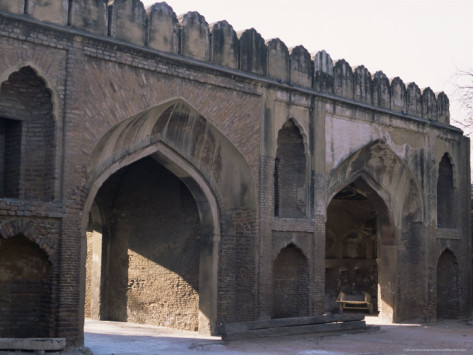
A bridge near the Kashmiri Gate

Kashmiri Gate

Kashmiri Gate

It happened at Koria Pul – one of the oldest bridge connecting Kashmiri Gate and Chandni Chowk; the two glittering chapters of Moughal history, the two sides of a railway divide. Night had suddenly grown colder and I was feeling alone in this heartless city. I was an unemployed bachelor, adrift, caught in the currents of mysteries of life. I had to walk down from Panja Shareef to Ballimaran as last pennies of my pockets stopped ringing. Someone had promised me to meet and a job could have been a possible outcome of that pregnant encounter. Nothing materialized and the next reality was the procurement of the evening meals that has to materialize from somewhere if I had to survive.

From that side of Kasmhiri Gate every step at the access of the bridge was heavier than the previous one. In this frightening loneliness I was trying to lose my thoughts in howling whistles of passing trains. I still had my muffler and darned over- all to protecte me from cold winds. As most of the doors which had any possibility of any opening or hope for the job had already been knocked and banged. Nothing succeeds like and success and nothing flops like a failed life. “I was the unluckiest and unwanted creature and there seemed to be no great reason to vouchsafe this world with my existence. This problems-infested world could have done better without me.” Those were the thoughts that haunted me as I minced my steps and looked up at the cloudless sky seeking some answers from one who was letting me cross that foggy night through this Koria Pul, hungry and helpless. Every dark night has a dawn and darker the clouds brighter the silver-lining – Optimism is the last refuge of a hapless soul.

There were scant any passenger across the bridge and I was the Knight of the Bridge at the moment. Then, from nowhere a tattered lady approached in a circuitous move and pulled the corner of my dress.
“Babu Ji, I’m hungry. Give me some money to eat. I shall pray for you and my baby will pray for you.” Irony of fate. A beggar was checking a destitute. I tried to look the other way. I didn’t know who wanted to laugh at my miseries at this juncture. Some times the sense of humor sparks at worst of the moments.
“I have a hundred rupee note. Do you have the change ?” I thought my howler would make her disappear.

“No, I don’t have. Please babu help me.” She replied and persisted.
“Why do you beg and why can’t you find some work for you instead of roaming the streets in this cold winter ?” I tried to reason with her without realizing that there was a mirror put in front of my face by this bedraggled unkempt mother.
“The kid is too small. If I go for work who would take care of her ?”
That was her problem but a logical man can’t accept begging as a worth while occupation to survive upon this planet which was so full of bubbling opportunities.

The child lay quiet, without moan as the mother began to unfold her thin torn shawl by gentle degree, looking down with anxious solitude at that concealed object – a miniature of suffering humanity.
The baby stretched her punny hand and feebly caressed he protectress.
Looking at me with imploring pity she again accosted , this time with more assurance and boldness.
“De na babu Allah tera bhala karega.”(Give babu, God will help you.)
“Sure, but I don’t know when Allah will help me.” I don’t remember if I said or not but she listened.

I saw her walking ahead of me with a kind of poise which if difficult to define in words. After a few steps, she stopped and looked back, waited for me.
“Down the bridge you can get the change. I come with you. Give me something babu I have to feed the baby.” I was annoyed and petrified at the script of the scene written for this strange situation by no one but who knows everything.

Under the light of lamp post I could see the exposed face of the baby. It was infinitely more touching than ever I saw – a beauty in the pathos of sleep.
Now I could see the shivering woman with her exposed body from the chinks of torn dress. We had already reached thedescending side abutting Chandni Chowk. For the whole world it was Chandni Chowk (The Brightened Square) but probably for three human beings, at the moment, it was the darkest side of a brightest square.

I remove my muffler with a flick and throw it at her.
“Bibi, I was lying. I have had nothing – no hundred rupee note, not even one rupee note. Take my muffler and protect yourself from the blistering cold weather and let me go.”

Naim Naqvi

Naim Naqvi

Did his graduation in Science discipline from AMU in 1972-73. He was Secretary of University Ali Society in 1970 and M.M. Hall Literary Society in early 70 's and member of Tayyabji Literary Society. Did his Diploma in Bakery Administration from HTT College Oxford Street London in 1987. Worked with National Herald - Delhi, Blitz - Bombay as Trainee Journalist and in Production Department with 'Naya Sansar Pictures' of Khwaja Ahmed Abbas at Bombay in early 70's. Traveled for study and training purposes to Germany, U.K., Switzerland, France, Dubai, Oman, AbuDhabi, Bahrain and Philepines.

More Posts

Allama Iqbal : The poet of the East


allama-iqbal

allama-iqbal

It is wrong to assume that Iqbal is the poet of Muslims or he belongs to Urdu literature alone. Iqbal transcends all boundaries. You cannot put him in any category. Like all great poets, he belongs to the whole mankind.

‘Sare Jahan se achcha Hindustan Hamara, Hum bulbulen hain iski yeh gulsitan hamara.’

MY INDIA is the best amongst all the nations of the world. We are its nightingales and this is our garden. That’s how ‘the poet of East – Allama Sheikh Mohammed Iqbal’  showered his unlimited love for his country. – India.

‘Khake witan ka humko har zarra devta hai” (Each dust particle of my motherland is god to me).

Iqbal has a great and unique vision of India and he had described his dream of a new India in these words:

Sach keh doon aye Brahmin gar tu bura na mane. (Should I speak the truth Oh Brahmin if you aren’t offended?)

Aa ek naya shiwali hum phir se yan bana de’n. (Let us make new temples again)Shakti bhi shanty bhi bhakto ke geet me hai. (There is strength and peace in the hymns of worshippers)

Dharti ke waasiyon ki mukti preet me hai. (Peace of inhabitants of the world lies in love)

MULLAHS HAVE issued a fatwa on Iqbal for daring to see this dream for a new India. It is wrong to assume that Iqbal is the poet of Muslims or he belongs to Urdu literature alone. Iqbal transcends all boundaries. You cannot put him in any category. Like all great poets, he belongs to the whole mankind.

Allama Iqbal was born in Sialkot on November 9, 1877. He learned Arabic and traditional eastern education under the guidance of famous scholar Meer Hasan. After MA in Philosophy, he received Ph D from Cambridge and German University. After passing the examination of Barrister, for some time he worked as a professor of Arabic in London University. In 1908, he returned to India and became professor in Lahore. One and half years later he started practicing law. British government bestowed the title of ‘Sir’ on him in 1922. In 1926, on the invitation of Madras University, he delivered series of 6 lectures on Islam. He was appointed as a member of Punjab Legislative Council. He presided over All India Muslim League in 1930. In 1931, he represented India in second ‘Round Table Conference’. In 1932, on Shaah of Afghanistan’s invitation he participated in welcome celebration in Kabul, along with Syed Sulaiman Nadwi and Sir Ross Masood. He died on April 21, 1938.
Iqbal, like so many Muslim intellectuals was disillusioned with the policies of Congress and suggested a federation of Muslim states to protect the culture and civilisation of Muslims. The purpose of this article is not to re-open the old controversial chapters of history as Allama Iqbal had died long before independence in 1938. The least I can say is he loved India with bottom of his heart. That he belongs to Pakistan is travesty of truth. “This is not the whole Truth,” said Professor Abdul Haq, an eminent Urdu critic. “Iqbal foresaw a federal structure for a free India, in which a Muslim-dominated north-western region could be a cultural unit like many others,” he said. As far as the idea of Pakistan is concerned, Iqbal denied that he was the originator of this idea. “Iqbal has clearly denied this in his letters to Raghib Hussain. People don’t talk about these letters since they don’t favor their point of view,” said Dr Haq.
Dr Abdul Haq said that Iqbal is the most misunderstood poet of the 20th century. “We must look at Iqbal in totality if we want to understand him,” he said. Iqbal’s tragedy was that his poetry was used by different groups to serve their own interests. His poetry had so many facets that he seemed to assume different roles in different phases of his poetry: he was a staunch nationalist, a vocal communist, an advocate of Hindu-Muslim unity, a humanist, a believer in Islamic revivalism, a freedom fighter, and an advocate of international brotherhood. No poet in Urdu, and I’m sure in any other Indian language too, has shed as many tears on India’s misery and colonial captivity.

Uth ke ab daore jahan ka aur hi andaz haiMashroq-o-maghrib me tere daur ka aghaz hai“Get up now that the style of the world has changed.It is the beginning of your age in the East and West.”


Naim Naqvi

Naim Naqvi

Did his graduation in Science discipline from AMU in 1972-73. He was Secretary of University Ali Society in 1970 and M.M. Hall Literary Society in early 70 's and member of Tayyabji Literary Society. Did his Diploma in Bakery Administration from HTT College Oxford Street London in 1987. Worked with National Herald - Delhi, Blitz - Bombay as Trainee Journalist and in Production Department with 'Naya Sansar Pictures' of Khwaja Ahmed Abbas at Bombay in early 70's. Traveled for study and training purposes to Germany, U.K., Switzerland, France, Dubai, Oman, AbuDhabi, Bahrain and Philepines.

More Posts

The double speak of BJP

BJP

BJP

The doublespeak of the BJP has come full circle. It has plumbed a new low in the politics of somersaults, contradiction and shifting sands. The party, whose principal plank was AKAHAND BHARAT had stooped low before MARATHI MANUS reservation agenda of Shiva Sena and now listen a clarion call, a latest diatribe by Shivraj Singh Chouhan – the roar of Lion Of Madhya Pradesh at Satna, “He would not allow Biharis to usurp jobs in the area. Karkhana lagega Satna mein aur naukri karne aayenge Bihar se, ye hum honey nahin denge. (Factories will be set up in Satna, but people from Bihar will get jobs in them, I wont allow this) .The chief minister said he had asked factories to employ local people. They will have to train local youths and employ them”. Article 16 says: Equality of opportunity in matters of public employment (1) There shall be equality of opportunity for all citizens in matters relating to employment or appointment to any office under the State. Does he ever read it?

Naim Naqvi

Naim Naqvi

Did his graduation in Science discipline from AMU in 1972-73. He was Secretary of University Ali Society in 1970 and M.M. Hall Literary Society in early 70 's and member of Tayyabji Literary Society. Did his Diploma in Bakery Administration from HTT College Oxford Street London in 1987. Worked with National Herald - Delhi, Blitz - Bombay as Trainee Journalist and in Production Department with 'Naya Sansar Pictures' of Khwaja Ahmed Abbas at Bombay in early 70's. Traveled for study and training purposes to Germany, U.K., Switzerland, France, Dubai, Oman, AbuDhabi, Bahrain and Philepines.

More Posts

A rare gesture of humanity

Forgiveness is the virtue that is preached by almost every religion. Forgiving others releases us from anger and allows us to receive the healing we need. Forgiving others spares us from the consequences of living out of an unforgiving heart.

ALMOST EVERY religion preaches the virtue of ‘forgiveness’. In the world so overwhelmed with the darker clouds of avenge, revenge and reprisals, a silver lining was seen in the attitude of a mother.

Five months ago, in the Burmese neighborhood of Al Khalidiya district of Saudi Arabia, a little girl Kalthom (Indian pronunciation Kulsoom) was tortured and killed by her step mother. The heartless woman had brutally disfigured the face of Kulsoom. It was full of blood and it was difficult to recognise her in morgue. It was so abhorrent to know that the father stood back and watched when the heinous was perpetrated.

The mother of the victim had imbued the best spirit of Islam. Perhaps she might have never heard of Bin Ladin or Baitullah and this incident didn’t shake the faith of the real mother in humanity. As the religion says: “Just as it is important to believe in the mercy and forgiveness of Allah, it is also necessary to base human relations on forgiveness. We cannot expect Allah’s forgiveness unless we also forgive those who do wrong to us. ”She says she is willing to forgive her and her ex-husband if asked by a court. The woman was sentenced to death and the man to 15 years in jail. The stepmother is also having here own kids. The aggrieved mother feels that executing the stepmother would not bring her daughter back to life and she was also willing to pardon her. The mother said that she made the decision as she knew what it felt like to lose a child. She said, “She (the stepmother) is also a mother with children and I know that her kids need her. My daughter will not come back if she was executed or jailed.”

It was the best example of ‘milk of humanity’. God says that it is in our own best interest to forgive! He is not talking about what is in the best interest of the person who needs to be forgiven. We are the ones who God is trying to protect. We are the ones who receive the most benefit from forgiveness, not the other person. Forgiving others releases us from anger and allows us to receive the healing we need. The whole reason God has given us specific direction is because He does not want anything to stand between us and Him. God’s love for us is beyond our comprehension. Forgiving others spares us from the consequences of living out of an unforgiving heart.

Naim Naqvi

Naim Naqvi

Did his graduation in Science discipline from AMU in 1972-73. He was Secretary of University Ali Society in 1970 and M.M. Hall Literary Society in early 70 's and member of Tayyabji Literary Society. Did his Diploma in Bakery Administration from HTT College Oxford Street London in 1987. Worked with National Herald - Delhi, Blitz - Bombay as Trainee Journalist and in Production Department with 'Naya Sansar Pictures' of Khwaja Ahmed Abbas at Bombay in early 70's. Traveled for study and training purposes to Germany, U.K., Switzerland, France, Dubai, Oman, AbuDhabi, Bahrain and Philepines.

More Posts

‘Begum Akhtar’-the gem with eternal glow

Begam-Akhtar

Begum Akhtar was born on October 7, 1914 in the small town of Faizabad, Uttar Pradesh and her maiden name was Akhtari Begum. She was born in a high class family that was not musically inclined but her uncle detected the latent talent in her.

“Ghazal usne cheri, hamen saaz dena, Zara umre- rafta ko awaz dena.” (She has spelt the magic of ghazal, give me the musical instrument; Let us recall the time that has gone by.)

A ghazal is a poetic expression of both the pain of loss or separation between two lovers and the beauty of love in spite of their pain.

Begum Akhtar was one the most  celebrated ghazal singer of India and her 35th death anniversary is being observed this week with musical soirees. Ghazal-singing of today has its roots in ‘Thumri’ that was given shape by Wajid Ali Shah, the last Nawab of Awadh who was exiled by the British during the 1857.

Begum Akhtar was born on October 7, 1914 in the small town of Faizabad, Uttar Pradesh in northern India and her maiden name was Akhtari Begum. She was born in a high class family that was not musically inclined but her uncle detected a latent talent in her.

On his insistence, she was sent to train under Ustad Imdad Khan, the great sarangi exponent. Later she was trained under Ata Mohammed Khan.  After the initial training she traveled to Calcutta with her mother and started learning music from classical stalwarts like Mohammad Khan, Abdul Waheed Khan and finally she became the disciple of Ustad Jhande Khan Saheb.

At the tender age of fifteen she gave her first performance and took the music world by storm. The famous poetess Sarojini Naidu appreciated her singing during a concert which was organized in the aid of victims of Bihar earthquake. This encouraged her to continue singing ghazals with more enthusiasm.

She did also cut her first album for the Megaphone Record Company and a number of gramophone records were released carrying her ghazals, dadras, thumris, etc. At the dawn of talkie era in India, Begum Akhtar acted in a few Hindi movies in thirties.

East India Film Company of Calcutta approached her to act in KING FOR A DAY (alias Ek Din Ka Badshah) and NAL DAMAYANTI in the year 1933. Like others of that era, she sang her songs herself in all her films. She continued acting in the following years. The movies she acted in are: Ameena (1934), Mumtaz Begum (1934), Jawaani Ka Nasha (1935), Naseeb Ka Chakkar (1935).

Begum Akhtar is  synonymous with ghazal gaayaki and is immortalized  for her own definitive style of singing-a style that few have been able to match. She is rightly known as Mallika-e-Ghazal.

From an aspiring ghazal singer she, with the passage of time, acquired remarkable maturity and an inimitable richness developed in her melodies. She has nearly four hundred songs to her credit. She was a regular performer on All India Radio. One trait that makes her different is that she used to compose her own ghazals. In 1945 she married a wealthy barrister form Lucknow and from Akhtaribai Faizabadi she became Begum Akhtar.

Her last concert was held in Ahmedabad and as she was not feeling well during the day she was rushed to rushed to the hospital soon after the concert and passed away on 30th of October, 1974 leaving a big void in ghazal lovers’ hearts.

She was posthumously awarded the Padmabhushan. Just eight days before her death, she recorded Kaifi Azmi’s ghazal: “sunaa karo merii jaan un se un ke afsaane , sab ajanabii hain yahaan, kaun kis ko pahachaane.”

Naim Naqvi

Naim Naqvi

Did his graduation in Science discipline from AMU in 1972-73. He was Secretary of University Ali Society in 1970 and M.M. Hall Literary Society in early 70 's and member of Tayyabji Literary Society. Did his Diploma in Bakery Administration from HTT College Oxford Street London in 1987. Worked with National Herald - Delhi, Blitz - Bombay as Trainee Journalist and in Production Department with 'Naya Sansar Pictures' of Khwaja Ahmed Abbas at Bombay in early 70's. Traveled for study and training purposes to Germany, U.K., Switzerland, France, Dubai, Oman, AbuDhabi, Bahrain and Philepines.

More Posts

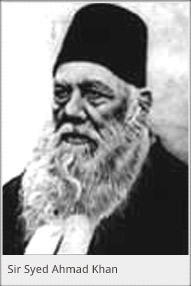
Sir Syed Ahmed Khan; a great visionary

Sir Syed Ahmad Khan

Sir Syed Ahmad Khan

He had witnessed with his own eyes the devastation, death and destruction – the untrammeled fire of vengeance and hate; and he had seen his own community being trampled underfoot by the White rulers.

SIR SYED Ahmed Khan was a legend in his life time; a rebel with a cause; a social reformer with a transparent and clear vision; a leader who changed the destiny of his community. He was born in Delhi on 17 October 1817. He was brought up in the finest of ’Elite Indian Muslim Traditions’.

He had witnessed with his own eyes the devastation, death and destruction – the untrammeled fire of vengeance and hate; and he had seen his own community being trampled underfoot by the White rulers. He had realized that animosity between British and Muslims, in the aftermath of the Indian Mutiny 1857, had not only marginalized the Indian Muslims but pushed them into an unenviable abyss of poverty, ignorance and shame. They had been relegated to the backwardness of many many centuries. He also felt that the socio-economic future of Indian Muslims had been put into jeopardy by their aversion to modern science and technology.

In that dusky gloom that was soured by the defeat of the last Moughal Emperor Bhahdur Shah Zafar he rose with a hope; trudged on the graveled road with a roadmap that is still a floating light-house in the sea of darkness.
Illusions, willfulness, cruelty, pride and illiteracy were the curious elements that comprised the Muslim society and feudalism persisted despite the horrific apocalypse it brought to ordinary Muslims. He tried to solve this jigsaw puzzle with all the resources or the scarcity of resources at his disposal. He wrote stinging articles and books rebuking the dogmas and practices which were prevalent in Muslim society. He was blunt, honest and straight and never demonstrated the indulgent savity of a fashionable healer. He was an assured and competent surgeon with an ability to overcome the fate of his community with his scissors of reforms.

He advised them to concentrate on education; he was against the involvement of his community into politics. He was great advocate of Hindu-Muslim unity and it is worth remembering that the first graduate of Aligarh was a Hindu.

Sir Syed challenged the orthodox Muslim clergy of his time and propagated a liberal and rational ideology based on modern concepts in the light of Holy Quran and Hadees (the traditions of Prophet Mohd P.B.U.H). His views were rejected by Muslim clergy and he was condemned as KAFIR by them. As he was personally affected by the Indian Mutiny he wrote the famous historical book – ‘Asbab-e-Baghawate- Hind’ (The Causes of Indian Mutiny) in which he audaciously criticized the British rulers and their policies. He did boldly and explicitly blamed the British for the causes of revolt.

During a visit to England (1869-70) he prepared plans for a great educational institution -”a Muslim Cambridge.” On his return he set up a committee for this purpose and also started an influential journal, Tahdhib al-Akhlaq “Social Reform”, for the uplift and reform of the Muslims. He founded the Mohammedan Anglo Oriental College at Aligarh, U.P. in 1875 which later bloomed as the A.M.U.

Sir Syed was an individual with exceptional qualities of leadership and he was a modern priest, a great tribune of Muslim society who, with a mighty grasp, shook it free from the shackles of sloth; ignorance and vermin that fed upon it.

His career as an author (in Urdu) started at the age of 23 with religious tracts. In 1847 he brought out a noteworthy book, “Assar Assanadid“- Monuments Seen Through His Eyes, on the antiquities of Delhi.
This great statesman, reformer and visionary man died on 27 March, 1898, in Aligarh.

‘Hazaron Saal Nargis apni be-noori pa roti hai,
Bari mushkil se hota hai chaman men deedawar paida.’

Naim Naqvi

Naim Naqvi

Did his graduation in Science discipline from AMU in 1972-73. He was Secretary of University Ali Society in 1970 and M.M. Hall Literary Society in early 70 's and member of Tayyabji Literary Society. Did his Diploma in Bakery Administration from HTT College Oxford Street London in 1987. Worked with National Herald - Delhi, Blitz - Bombay as Trainee Journalist and in Production Department with 'Naya Sansar Pictures' of Khwaja Ahmed Abbas at Bombay in early 70's. Traveled for study and training purposes to Germany, U.K., Switzerland, France, Dubai, Oman, AbuDhabi, Bahrain and Philepines.

More Posts

Shastra Puja: An archaic and dangerous tradition

shastra puja

shastra puja

Shastra Puja must have had its relevance in the distant past. However, in the present volatile atmosphere of our country this practice seems more to frighten the minorities rather than appease the Gods or deities of arms.

I HAVE the highest regards for all the religions and I fully appreciate their traditions. However, reading two news items recently, I am at a loss to comprehend the logic, relevance and continuance of many practices followed by them.

In one case, Gujarat Chief Minister Narendra Modi performed a ‘Shastra Puja’ (weapon worship) on the occasion of Dussehra at his house in Gandhinagar. Weapons worshipped in this Puja were those used by Modi’s security jawans. Modi also gave a pep talk to personnel of various security forces present at the ceremony.

In the other, Naresh Motwani, a 50-year-old flour mill owner, was participating in a ‘‘Shastra puja (worship of arms)’’ as part of the RSS’s foundation day programme. According to the police, a bullet from a pistol went off accidentally and shot through his throat killing him instantly. The incident occurred in RSS-run Saraswati Sishu Mandir school under Kamla nagar police station.

Shastra Puja must have had its relevance in the distant past. However, in the present volatile atmosphere of our country this practice seems more to frighten the minorities rather than appease the Gods or deities of arms. Our cool and dispassionate Hindu brothers themselves can see the game behind it.

If RSS exudes with so much love for weapons, it should demand the government to make at two to three years compulsary military training of all youth of both the sexes with an attractive stipend. Rather than these provocative demonstrations of belligerence, they should devote their energies to teach the masses about keeping our rivers clean.

They should inculcate the virtues of honesty and integrity in every walk of life in our society. Let our smart Indian Army handle these games of arms. Let all the citizens of the country live in peace and friendship. Will someone tell these religious vigilante that their venomous Prachar and sowing of the seeds of religious hatred is no more acceptable to emerging India? These putrid policies have lost much of its sting.

Secularism in the Indian context connotes the eradication of all attitudes and practices derived from religion which impedes the development and retard the growth of India as an integrated nation. Can’t we learn something from the cataclysmic dismemberment of Pakistan? It was a country founded on negative philosophies and ideologies. It was sewn and held together for a brief period on a questionable religious homogeneity. This homogeneity is nothing but the same as Cultural nationalism of RSS.

Naim Naqvi

Naim Naqvi

Did his graduation in Science discipline from AMU in 1972-73. He was Secretary of University Ali Society in 1970 and M.M. Hall Literary Society in early 70 's and member of Tayyabji Literary Society. Did his Diploma in Bakery Administration from HTT College Oxford Street London in 1987. Worked with National Herald - Delhi, Blitz - Bombay as Trainee Journalist and in Production Department with 'Naya Sansar Pictures' of Khwaja Ahmed Abbas at Bombay in early 70's. Traveled for study and training purposes to Germany, U.K., Switzerland, France, Dubai, Oman, AbuDhabi, Bahrain and Philepines.

More Posts

Khuda Hafiz versus Allah Hafiz

The term Allah Hafiz or Khuda Hafiz are not used in Arabian peninsula. It is a pure Mughal- Indian creation. These are the most emotional parting words that were common since time immemorial in Urdu-Hindi speaking regions.

THE SUBJECT under discussion – ‘Khuda Hafiz versus Allah Hafiz’ is the best example of the intolerance of Wahabi Islam, a stringent version of this religion flourishing throughout the Muslim world and responsible for most of the radical troubles around the globe. Let me remind the readers that the term Allah Hafiz or Khuda Hafiz are never used in Arab peninsula. It is a pure Mughal-Indian creation.

Most of the readers would recollect the famous song – ‘Guzra Hua Zamana aata naheen dubarah…Hafiz Khuda tumhara’. These were the most emotional parting words that were common since time immemorial in Urdu-Hindi speaking regions.

The first time Allah Hafiz was used in public was in 1985 by a famous TV host, a frequent sight on PTV during the Zia era.

The Wahabi schools took up the cudgels for this concept as Khuda is more a Persian word and could have some affinity to Iran which is a Shia dominated country. The invention of Allah Hafiz words has its roots in Pakistan as General Ziaul Haq, a Wahabi dictator, with the help of Gulf and American money started setting up mosque-schools in an attempt to pick the kids and softer brains to brain wash them with the heinous takfiri ideology which approves the killing of innocents in the name of Jihad.

This ideology, though originated in Saudi Arabia and got easy disciple in poor Islamic countries. This strain of faith, in a softer form, is now becoming popular in Indian Muslims also as a reaction to the ideologies propagated by Rashtriya Swayamsevak Sangh (RSS) and other similar fanatical outfits. Majority of Pakistanis and Afghanis, especially in Punjab and Pushtoon areas follow this ideology now. Geneneral Zia had prepared them for the grand ‘Afghan jihad’ against the atheistic Soviet Union and Hindu India.

The practice to fervently banish the words ‘Khuda Hafiz’ can be traced back to a mere six to seven years in the past. It was in 2002, when a series of banners started appearing across Sharea Faisal in Karachi, Pakistan. Each banner had two messages. The first one advised Pakistani Muslims to stop addressing God by the informal ‘Tu’ and instead address him as ‘Aap’ (the respectful way of saying ‘you’ in Urdu). The second message advised Pakistanis to replace the term Khuda Hafiz with Allah Hafiz.

The banners were produced and installed by Islamic organisations associated with a famous Wahabi mosque in Karachi.

In India, it is popularised by the Tableeghi Jamaat- Indian Muslim’s answer to RSS. This ubiqutious jamaat is the trend-settler of most of the new inwardly or outwardly changes that are easily visible in any aggressive Muslim today. These new Islamic evangelists are doing a lot of groundwork to culturally protect Muslims from a pluralistic and religiously tolerant milieu of India and leading them to their ‘correct’ version of Islam.

These Islamist culture-evangelists became more aggressive around 1990s. Drawing room and TV evangelists like Ahmed Deedat went about attempting to construct a ‘true’ Islamic society. However, I have never heard Deedat indulging in Shia-Sunni or Hindu-Muslim controversy. The new breed of Islamic evangelist as Dr Zakir Naik took up attacking all religions and one of their prescriptions was to replace the commonly used Khuda Hafiz with Allah Hafiz.

They believed that once they had convinced Muslims to follow the faith by adorning a long beard and hijab, the words Khuda Hafiz would not seem appropriate coming out from the mouths of such Islamic-looking folks. They believed that Khuda can mean any God, whereas the Muslims’ God was Allah. Some observers suggest that since many non-Muslims also use Khuda Hafiz so it is a cultural pollution.

Consequently, the sweet sound Khuda Hafiz is almost vanishing from our life!

Naim Naqvi

Naim Naqvi

Did his graduation in Science discipline from AMU in 1972-73. He was Secretary of University Ali Society in 1970 and M.M. Hall Literary Society in early 70 's and member of Tayyabji Literary Society. Did his Diploma in Bakery Administration from HTT College Oxford Street London in 1987. Worked with National Herald - Delhi, Blitz - Bombay as Trainee Journalist and in Production Department with 'Naya Sansar Pictures' of Khwaja Ahmed Abbas at Bombay in early 70's. Traveled for study and training purposes to Germany, U.K., Switzerland, France, Dubai, Oman, AbuDhabi, Bahrain and Philepines.

More Posts