Amitabh Bachchan: From Allahabad to Ahmedabad

Amitabh Bachchan

Amitabh Bachchan

Amitabh Bachchan might be one of the greatest cine idol of this country but he is an opportunist par excellence; and there can’t be two views on this. His recent showers of praise at the Gujrat state and its history-sheeted chief minister is an absolute proof of my statement. Today I felt sorry for my prayers when he had met an accident while shooting for the film “Coolie”.

I couldn’t believe my eyes and ears when Big B told mediapersons, “There are lots of good things in Gujarat which should be promoted. I am ready to give my voice and face for the promotion of Gujarat tourism.” On the day Samajwadi Party’s national general secretary Amar Singh resigned from all party posts, Bachchan, who is his friend and Uttar Pradesh’s former brand ambassador, said he was not aware of Singh’s resignation. Earlier, Bachchan gifted Modi a copy of ‘Madhushala’ (A tavern), a collection of quatrains by his late father Harivansh Rai Bachchan. Modi thanked Bachchan for his offer to promote Gujarat tourism and said Hindi films were a major influence on Indian society. Calling Bachchan the “Mahanayak” of this phenomenon, Modi said, “I myself am influenced by Bachchan, after all I am a common man”. Big B, clad in black Jodhpuris, was very diplomatic when media asked him, “Do you think Modi is Big B of politics?” He said, “I can’t compare myself with Modi. Inke baare main kya bolu. (what can I say about this man )” which left Modi blushing. “He is doing a good job as a chief minister in Gujarat. His efforts are commendable,” he said.

His cowardice turnaround and betrayal to Hindi Bhashis in Mumbai and the nation when caught in the claws of MNS is still fresh in public memory.
Do I need to remind what Atal Bihari Vajpaye had advised to Modi when he had visited Gujrat? Did he hear about the book ‘The Clash Within” written by Prof Martha C. Nussbaum. She teaches philosophy and law at the University of Chicago. Her most recent book is Hiding from Humanity: Disgust, Shame, and the Law. What did she write about Modi and his governement would put to shame to our whole civilized society.

That he is a thankless man is obvious from the fact that he had rarely ever mentioned his greatest benefactor Khwaja Ahemd Abbas who gave him the first break in ‘Saat Hindustani’. What did he do for Comedian Mehmood when he was down at his luck in his last days? Mehmood was the one who gave him a commercial break in ‘Bombay to Goa’.
He encashed the public support for the political benefit of Amar Singh and Mulayam Singh. Their reign was one of the most undemocratic, parochial, casteist, corrupt in the state history. They pushed his wife up and she became the Member of Parliament. His whole family got the highest cultural award from the UP government. Many even today laugh at the award to his son.

Amitabh did great injustice to his state by promoting a product (SP the political party) . It was a disservice to his motherland by befooling gullible public. The product of Amitabh was based on failure of law and order, belief in creating social friction, promotion of crude casteism.
Some may say that the closeness of Amitabh with Samajwadi Party which was politically powerful at that time in U.P. as compared to Congress was an attempt to give a befitting reply to Sonia Gandhi. Sonia on the other hand has been able to maintain her dignity in the whole controversy.

Today he is offering to support and sell Modi who had never ever shed one tear or expressed his sympathy for the hapless victims of Gujrat riots who were also innocent Indians. Whom Amitabh thinks he would fool ?

Naim Naqvi

Naim Naqvi

Did his graduation in Science discipline from AMU in 1972-73. He was Secretary of University Ali Society in 1970 and M.M. Hall Literary Society in early 70 's and member of Tayyabji Literary Society. Did his Diploma in Bakery Administration from HTT College Oxford Street London in 1987. Worked with National Herald - Delhi, Blitz - Bombay as Trainee Journalist and in Production Department with 'Naya Sansar Pictures' of Khwaja Ahmed Abbas at Bombay in early 70's. Traveled for study and training purposes to Germany, U.K., Switzerland, France, Dubai, Oman, AbuDhabi, Bahrain and Philepines.

More Posts

The wintry death at Pusa Road, New Delhi

I’m sorry I am a little too late in realizing that a new year has already dawned! Like always, my priorities had been wrong. In the hallucinations and deliriums of real life, I began to celebrate the 26th of January before 1st at Pusa Road, New Delhi. Did you ever come across the word ‘Raynbasera’? No? It’s not a word from outer-space or from any melody of Indian film. It’s a symblolic great gesture of humanity, a solid three-dimensional proof that as a society we are not insensitive and irresponsible to the plight of our unlucky fellow citizens.

It is a night shelter that the Government of Delhi offers to those who have nowhere to go during icy winds when you and me sleep in the cozy warmth of heated houses. It doesn’t matter that despite these facilities not a wintry night passes when a few dreamers and their dreams consign to their logical end, while some lucky cadavers find their photographs in the local newspapers under the heading of “unclaimed bodies.” We have just celebrated one of the most loud and boisterous New Year with “Jai Ho.”

Logic tells us that we have every right to celebrate when we have earned to squander by dint of our labour. I’m a God fearing man and my brain is conditioned by my parents to believe that all misfortunes and troubles are ordained and pre-destined for some mysterious purpose of an all-wise Providence.

I don’t think that city fathers would also be averse to my trumpeted thoughts of piety. Naturally, the myrmidons of law have more faith in the auto-corrections of nature. So they felt it fit to pull down the night shelter at Pusa Road for the future beautification of the capital few days before New Year. These officers of MCD had firm faith in God, Bhagwan, Allah, Ram, Wahe Guru and Jesus and knew that Mighty Power would arrange automatically some new cozy refuge for the 250 living beings, who were rendered homeless from that Raynbasera.
When the stars were shining in the sky, a balloon-seller Bhima failed in his struggle to live. He was one of the uprooted displaced occupants of Raynbasera and could not brave the intense cold. Crying inconsolably, his mother Saru, and grandmother Girija pointed to a thin blanket that Bhima has wrapped himself up to beat the cold. Bhima had his food and went off to sleep. However, just as an hour or two later when Girija tried to wake him up, she found he was dead.

“He had returned a happy man on the night of December 31 earning over Rs 300 by selling balloons but he didn’t wake up to see the dawn of a New Year,” said Saru. Her unsold balloons had burst by Friday afternoon and hopelessly clung to the branches of a tree. His uncle, Hanumanta, told the reporter: “Woh itna khush tha ke sath wale hotel se aa rahi gane ki awaz par nach raha tha. (He was so happy that he was dancing to the tunes of a song being played in a nearby hotel.) He wanted to give some money to his mother and grandmother.”

On Friday morning, they cremated Bhima’s body. Now please don’t ask or tell these innocent MCD officers or city fathers about this incident because it might spoil their breakfast as it had done for me or you. They might suggest, “Please ask God why did He allow the Raynbasera at Pusa Road to be demolished without any alternate arrangement?” As for Bhima and his family, it was their lot! Jai Ho!

Naim Naqvi

Naim Naqvi

Did his graduation in Science discipline from AMU in 1972-73. He was Secretary of University Ali Society in 1970 and M.M. Hall Literary Society in early 70 's and member of Tayyabji Literary Society. Did his Diploma in Bakery Administration from HTT College Oxford Street London in 1987. Worked with National Herald - Delhi, Blitz - Bombay as Trainee Journalist and in Production Department with 'Naya Sansar Pictures' of Khwaja Ahmed Abbas at Bombay in early 70's. Traveled for study and training purposes to Germany, U.K., Switzerland, France, Dubai, Oman, AbuDhabi, Bahrain and Philepines.

More Posts

A balloon seller’s story

When the stars were shining in the sky, a balloon-seller Bhima failed in his struggle to live. He was one of the uprooted and displaced occupants of Raynbasera and could not brave the intense cold.

I AM sorry I am a little late in realising that a new year has already arrived! Like always my priorities were wrong. In the hallucinations and deliriums I began to celebrate the 26th of January before 1st January at Pusa Road, New Delhi.

Did you ever come across the word ‘Raenbasera’? No? It’s not a word from outer-space or from any melody of Indian film. It’s a great gesture of humanity, a solid three dimensional proof that as a society we are not insensitive and irresponsible to the plight of our unlucky fellow creatures. It is a night shelter that the government of Delhi offers to those who have nowhere to go during icy winds when you and me sleep in the cozy warmth of heated houses. It doesn’t matter that despite these facilities not a wintry night passes when a few dreamers and their dreams consign to their logical end while some lucky cadavers find their photographs in the local newspapers under the heading of “unclaimed bodies.”

We have just celebrated one of the most loud and boisterous New Year with “Jai Ho.” Logic tells us that we have every right to celebrate when we have earned to squander by dint of our labour.

I’m a God fearing man and my brain is conditioned by my parents to believe that all misfortunes and troubles are ordained and pre-destined for some mysterious purpose of an all-wise Providence. I don’t think that city fathers would also be averse to my trumpeted thoughts of piety. Naturally, the myrmidons of law have more faith in the auto-corrections of nature. So they felt it fit to pull down the night shelter at Pusa Road for the future beautification of the capital few days before New Year. These officers of MCD had firm faith in God, Bhagwan, Allah, Ram, Wahe Guru and Jesus and knew that Mighty Power would arrange automatically some new cozy refuge for the 250 living beings, who were rendered homeless from that Raynbasera.

When the stars were shining in the sky, a balloon-seller Bhima failed in his struggle to live. He was one of the uprooted displaced occupants of Raynbasera and could not brave the intense cold.

Crying inconsolably, his mother Saru, and grandmother Girija pointed to a thin blanket that Bhima has wrapped himself up to beat the cold. Bhima had his food and went off to sleep.

However, just as an hour or two later when Girija tried to wake him up, she found he was dead. “He had returned a happy man on the night of December 31 earning over Rs 300 by selling balloons but he didn’t wake up to see the dawn of a New Year,” said Saru. Her unsold balloons had burst by Friday afternoon and hopelessly clung to the branches of a tree. His uncle, Hanumanta, told the reporter: “Who itna khush tha ke sath wale hotel se aa rahi gane ki awaz par nach raha tha. (He was so happy that he was dancing to the tunes of a song being played in a nearby hotel.) He wanted to give some money to his mother and grandmother.” On Friday morning, they cremated Bhima’s body.

Now please don’t ask or tell these innocent MCD officers or city fathers about this incident because it might spoil their breakfast as it had done for me or you. Please ask God why did He allow the Raynbasera at Pusa Road to be demolished without any alternate arrangement? As for Bhima and his family, it was their lot! Jai Ho!

Naim Naqvi

Naim Naqvi

Did his graduation in Science discipline from AMU in 1972-73. He was Secretary of University Ali Society in 1970 and M.M. Hall Literary Society in early 70 's and member of Tayyabji Literary Society. Did his Diploma in Bakery Administration from HTT College Oxford Street London in 1987. Worked with National Herald - Delhi, Blitz - Bombay as Trainee Journalist and in Production Department with 'Naya Sansar Pictures' of Khwaja Ahmed Abbas at Bombay in early 70's. Traveled for study and training purposes to Germany, U.K., Switzerland, France, Dubai, Oman, AbuDhabi, Bahrain and Philepines.

More Posts

2009: A year that was too long

We the Indians love fiction and poverty provides the best stories. It is entirely a different matter if we talk about those hapless beings who are below the poverty line. We can talk and think about them before the next general elections.

A FEW years back, near the underground toilet of Hyde Park, a white beggar with a guitar was singing:

“The rich is rich and poor is poor and the twin shall never meet. So what? I am a bathroom singer.” Before visiting that part of globe I had always dreamed of West as El Dorado. My illusions disappeared in the mist when I saw the helpless homeless poor East Enders covering themselves with discarded ply-boards on the sidewalks in the morning to protect from the treacherous snow and chill at Piccadilly Circus. I wonder how ignorant are those who consider that only we Indians are poor while our government and governing party is doing everything possible under the sun to ameliorate the suffering and improve the lot of those who are out at elbows and down at heels. Why can’t these poor go to London and see for themselves the sufferings of West?

Any way, the year 2009 seemed to stretch endlessly as blood-pressures of house-wives were going sky high after every visit to empty kitchens. Every rack is empty like the pocket of a beggar. The year that is gone presented an absolute proof of Murphy’s Law that if any thing has to fail it would fail at worst of the moment. I realised it today when my ‘better half’ refused to part with even ten rupee note to bring a New Year gift or anything for my kids that could still be fetched in ten rupees. But, as a second thought – why to worry about these sad stories that the lowest-middle-classes like myself keep churning out to spoil the show? Of course, being one of them I know them well.

These throngs are the habitual victim of mental sickness named impecuniousness. They are not willing to believe that our lady of sacrifices- Sonia Ji and the embodiment of honesty and gentility-Manmohan Singh and their team is leaving no stone unturned to bring the prices of commodities down to affordable level so that these lowest-middle classes could put at least dry bread on the table when their kids go to school. We the Indians love fiction and poverty provides the best stories. It is entirely a different matter if we talk about those hapless beings who are below the poverty line. We can talk and think about them before the next general elections. Why to worry about them so early? Now to bring colour at your faces and catch some regale of the new year, I am submitting a stale table to demonstrate how all this talk of poverty is sheer non-sense.

India is the 12th richest country in the world. Lakshmi Mittal is worth 25 billion USD; Mukesh Ambani14; Azim Premji 12.7; Sunil Mittal 12.5; Hinduja 12.4; Ruias 12; Ramesh Chandra 11.6; Birla 11; and the poor amongst the richest ten are Tulsi Tanti 10 and Anil Ambani 10 billion USD.

Right now I am in the company of rich and I don’t feel like talking about those poor whose worth is below 10 billion USD.

Someone was telling yesterday that a Big Boss cornered with 125 crore rupees for scripting a show which most of the people believe was fake. Few beautiful damsels are going to charge few crores for few thumkas on the eve of New Year. I have never been to a five star hotel and I don’t know what they do over there.

Naim Naqvi

Naim Naqvi

Did his graduation in Science discipline from AMU in 1972-73. He was Secretary of University Ali Society in 1970 and M.M. Hall Literary Society in early 70 's and member of Tayyabji Literary Society. Did his Diploma in Bakery Administration from HTT College Oxford Street London in 1987. Worked with National Herald - Delhi, Blitz - Bombay as Trainee Journalist and in Production Department with 'Naya Sansar Pictures' of Khwaja Ahmed Abbas at Bombay in early 70's. Traveled for study and training purposes to Germany, U.K., Switzerland, France, Dubai, Oman, AbuDhabi, Bahrain and Philepines.

More Posts

Another winter another Gandhi

He was not even 12 as it appeared from his decrepit bony figure. I’m writing about a bedraggled and unkempt kid who, if alive might still be struggling to find his identity.

HISTORY IS often made to glorify or destroy one individual. Ironically, the individual I am talking about was not even a grown-up man but a child. He was not even 12 as it appeared from his decrepit bony figure. I’m writing about a bedraggled and unkempt kid who, if alive might still be struggling to find his identity.

It is another matter that I am lucky as I am writing his story sitting in a room warmed with an oil heater. Where is he at this moment? I don’t know. It is difficult to survive the Delhi nights with the deadly chill on the road while the mercury is touching 7 degree Celsius.

A few days ago I had to make an urgent trip to Lucknow. I was able to afford Tatkal payment for ‘Garib Rath’ so I entered the train with Rs. 800 and a worn-out traveler’s brief-case. He had boarded the train with shards and flints in his dirty crooked hands with the nails that were never cut. His torn shirt had no pocket.

His trousers had so many colors that you could call it VIBGYOR in action under the domination of soiled hue. Having entered the compartment I checked my berth and planted myself like a Maharajah. He stood in the middle of the berths and began with a dirge of Talat Mehmood’s – “Aey mere dil kaheen aour chal, ghum ki duniya se dil bhar gaya….dhoond le ab koyi ghar naya.”

I remember Talat Mehmood – the golden voice of Indian cinema who became the second victim of creative intrigues of film industry after Master Madan. Talat was my childhood favourite and the child’s rendition of this in this wintry evening put the clock back for me.

Talat was a singer of the century. He was compelled by circumstances to sing at the birthday parties and weddings of the rich in five star hotels. This child was obviously a beggar and his circumstances had put him in Garib Rath. His delivery was clear with a fair grip over pronunciation that reflected his background. He played with those flints in his fingers with a mastery that could put to shame many of our copy-cat music directors. The train was yet to leave Hazrat Nizam Uddin Railway Station and the passengers were still boarding the train. After the performance he held out his palm with an appeal in his bleary eyes. Some one rupee coins were thrown at him and he disappeared.

“Garib Rath” was Laluji’s baby to make the middle classes enjoy the luxury for at least one night at reasonable prices, what the rich take for granted. It doesn’t have the shutters of ordinary trains which you could pull down after smoking the bidi or when the icy wind chills your bones. It has packed glass-windows which run the length of the train. Your chattering teeth stop hitting their sharp edges once you enter the compartment. When I looked out there were hundreds and hundreds of people on the platforms waiting for other destinations. I appreciated the new sense of discipline of Delhi boarders as no one was knocking at the door “let us in, we know you have space in there!” At the assigned time the train pulled out of station.

My co-passenger in the next seat was a Mantriji’s relative and his retinue. As the train crossed Ghaziabad, two suitcases were erected vertically and a long rectangular six-ply plank was perched on it. A servant put up the day’s newspaper on the plank to make a smart table. Some tiffin materialized from somewhere and presto! It was a healthy competition between “Chappan Bhog” and “Kareem Nematkada” right before my eyes.

They asked me to join in. I politely refused as a principle. My heart was willing my mind was discrete. A lot of food was still on the table when Mantriji’s relative and his staff called it a night. The residue was gathered and wrapped in the crumpled newspaper in a slip-shod way and pushed under the seats. After some time the travellers began to feel drowsy and berths were unfolded, the lights of the compartment were switched off and Garib Rath rather the ‘poor’s palace-on-wheels’ continued its journey.

I got up around midnight to go to the toilet. It was an unfriendly hour but you can‘t refuse the call of nature. One needs to be a circus acrobat if you want to land safely on the floor from the 3rd tier height. As I was struggling with my belt, there was a barrage of rarest abuse just outside. Then there was more banging and I felt more secure inside than outside.

As the commotion came down to a low pitch I gathered courage and ventured out. Now I was fully awake. There were people in the corridor and all were embroiled in high pitched dialogue about a train-thief. I was wondering if I was dreaming this but it was for real. The same boy at the door. Now he had a small broom in his hand for cleaning the floor of the compartment. He was almost hanging from the door. I thought they were pushing him out. No, they were not that unkind. They were just abusing him for not getting down at Moradabad. Someone instructed him to get down at the next station.

I said, “Don’t be silly. Where he will go in this chilly night?”
“Saley bhikari char atae hain…………”.
“But where will he go?” I tried to reason with him.

“Aap bahut hamdard ban rahe ho. Jab tumhara kuch qeemti chal jaega to hum hi ko ilzam doge.” You are showing compassion for him but you would be the first to complain when any of your costly belongings are stolen. Poverty has many reasons to turn to crime. The poor are aware of that trait and rich are more afraid of that trait.
Garib Rath slowed down as the next stop was approaching. A new station, a new destination for few arrived but it didn’t matter for the passengers who were bound for longer destinations. This boy was offloaded at a station which was never his destination. I may be wrong. Any station could be a destination of a poor kid.

A few decades back Mahatma Gandhi was thrown out of a train in South Africa. He was strong and he had fought against that treatment. His had succeeded in liberating his own country from the same races. Tonight a new Gandhi failed desperately in his own country. One of Gandhi’s children was again kicked out of the train in winter. This kid is not the first and would not be the last who will be thrown out of a moving train. Another Mohd Toughlaq was defeated tonight; another without-ticket kid might have become the object of Talat’s melody – out of this duniya of ghum – ghum ki duniya se dil bhar gaya. Perhaps this winter is too cold to survive.

Naim Naqvi

Naim Naqvi

Did his graduation in Science discipline from AMU in 1972-73. He was Secretary of University Ali Society in 1970 and M.M. Hall Literary Society in early 70 's and member of Tayyabji Literary Society. Did his Diploma in Bakery Administration from HTT College Oxford Street London in 1987. Worked with National Herald - Delhi, Blitz - Bombay as Trainee Journalist and in Production Department with 'Naya Sansar Pictures' of Khwaja Ahmed Abbas at Bombay in early 70's. Traveled for study and training purposes to Germany, U.K., Switzerland, France, Dubai, Oman, AbuDhabi, Bahrain and Philepines.

More Posts

Sachin Tendulkar – The giant killer

Sachin-Tendulkar

Sachin-Tendulkar

By criticising Sachin Tendulkar’s patriotic fervour, Balasaheb Thackarey has truly bitten more than he could chew. As the nation leapt into Sachin’s defence, the master blaster inadvertently knocked down a much bigger target this time.

ONCE UPON a time, India was a liberal and tolerant place. Then we started learning how to control free thinking and free writing. Somewhere along the way, creative artists and writers also fumbled and forgot that with freedom comes certain responsibilities.

Then came the Emergency and the state told us, it knew better what was food for us, our family and our nation. The public rejected these concepts outright and the originator of these concepts. Then, Kudip Nayar came with his landmark book,“The Judgement”. It told everything about dictatorship, its evolution and it’s obnoxious outcome. We were back on the track of liberty and civilised life.

That was a time when a cartoonist had already graduated into politics and experimented with success about the applied art of mobbing. He had the patronage of Congress Party as its ebullient Chief Minister VP Naik and was ruling the rich state of Maharashtra. The name of the cartoonist was Balasaheb Keshew Thackeray.

He had started his career in the Free Press Journal in Mumbai in the 1950s. His cartoons were also published in the Sunday edition of The Times of India. In 1960, tasting some name and fame, he decided to launch his own cartoon weekly Marmik with his brother. Initially, it was publishing articles provoking Marathi Monoos against Gujarati businessmen, who wielded immense influence and south Indian labour, who were available at pittance. Thackeray formed the Shiv Sena on June 19, 1966 and its main objective was to ensure job security for Maharashtrians against immigrants from southern India, Gujaratis and Marwaris.

Within a short time, Shiv Sena transformed into an anti-communist organisation, which challenged and wrested control of major trade unions in Mumbai from the CPI. The Shiva Saniks gained strength and some of them even began to demand protection money from Gujarati and Marwari business leaders.

It later allied itself with the Bharatiya Janata Party (BJP). The BJP-Shiv Sena combine won the 1995 Maharashtra state assembly elections and came to power. During the tenure of the government from 1995 to 1999, Thackeray was nicknamed “remote control”, since he played a major role in government policies and decisions from behind-the-scenes.

On November 11, 2009, Thackeray published an editorial in Saamana which criticised a statement made by Sachin Tendulkar in an interview where he said “Mumbai belongs to India… I am a Maharashtrian and am extremely proud of that, but I am an Indian first.”

This time he made a remark that he would regret all his life. He bit more than he could chew. Today, Indians have realised the truth and everyone, including Marathi Manoos, have joined the nation in condemning the politics and ideology of the Thackareys.

Sachin has made a master stroke which is heavier, impressive, convincing and long lasting. The cookie is finally broken. David has subdued the Golaith !

Naim Naqvi

Naim Naqvi

Did his graduation in Science discipline from AMU in 1972-73. He was Secretary of University Ali Society in 1970 and M.M. Hall Literary Society in early 70 's and member of Tayyabji Literary Society. Did his Diploma in Bakery Administration from HTT College Oxford Street London in 1987. Worked with National Herald - Delhi, Blitz - Bombay as Trainee Journalist and in Production Department with 'Naya Sansar Pictures' of Khwaja Ahmed Abbas at Bombay in early 70's. Traveled for study and training purposes to Germany, U.K., Switzerland, France, Dubai, Oman, AbuDhabi, Bahrain and Philepines.

More Posts

A rare gesture of humanity

Forgiveness is the virtue that is preached by almost every religion. Forgiving others releases us from anger and allows us to receive the healing we need. Forgiving others spares us from the consequences of living out of an unforgiving heart.

ALMOST EVERY religion preaches the virtue of ‘forgiveness’. In the world so overwhelmed with the darker clouds of avenge, revenge and reprisals, a silver lining was seen in the attitude of a mother.

Five months ago, in the Burmese neighborhood of Al Khalidiya district of Saudi Arabia, a little girl Kalthom (Indian pronunciation Kulsoom) was tortured and killed by her step mother. The heartless woman had brutally disfigured the face of Kulsoom. It was full of blood and it was difficult to recognise her in morgue. It was so abhorrent to know that the father stood back and watched when the heinous was perpetrated.

The mother of the victim had imbued the best spirit of Islam. Perhaps she might have never heard of Bin Ladin or Baitullah and this incident didn’t shake the faith of the real mother in humanity. As the religion says: “Just as it is important to believe in the mercy and forgiveness of Allah, it is also necessary to base human relations on forgiveness. We cannot expect Allah’s forgiveness unless we also forgive those who do wrong to us. ”She says she is willing to forgive her and her ex-husband if asked by a court. The woman was sentenced to death and the man to 15 years in jail. The stepmother is also having here own kids. The aggrieved mother feels that executing the stepmother would not bring her daughter back to life and she was also willing to pardon her. The mother said that she made the decision as she knew what it felt like to lose a child. She said, “She (the stepmother) is also a mother with children and I know that her kids need her. My daughter will not come back if she was executed or jailed.”

It was the best example of ‘milk of humanity’. God says that it is in our own best interest to forgive! He is not talking about what is in the best interest of the person who needs to be forgiven. We are the ones who God is trying to protect. We are the ones who receive the most benefit from forgiveness, not the other person. Forgiving others releases us from anger and allows us to receive the healing we need. The whole reason God has given us specific direction is because He does not want anything to stand between us and Him. God’s love for us is beyond our comprehension. Forgiving others spares us from the consequences of living out of an unforgiving heart.

Naim Naqvi

Naim Naqvi

Did his graduation in Science discipline from AMU in 1972-73. He was Secretary of University Ali Society in 1970 and M.M. Hall Literary Society in early 70 's and member of Tayyabji Literary Society. Did his Diploma in Bakery Administration from HTT College Oxford Street London in 1987. Worked with National Herald - Delhi, Blitz - Bombay as Trainee Journalist and in Production Department with 'Naya Sansar Pictures' of Khwaja Ahmed Abbas at Bombay in early 70's. Traveled for study and training purposes to Germany, U.K., Switzerland, France, Dubai, Oman, AbuDhabi, Bahrain and Philepines.

More Posts

Neighbours and the best friends

Friendship is an impetus that remains unchanged with the change of the situations. Cultivate friendship. It cost nothing. It is one of the costliest treasure in life. Friend is one who stays through it all- inconceivable hard or pleasant situations.

“To a friend’s house the way is never long.”

IN THESE unfortunate times when a sacrosanct relationship like neighbourliness is being rendered as a superfluous topic, it’s really an uphill task to do a serious write-up on this subject. In most of the modern metropolis life is not so conducive to the old-style friendship and neighbourhood doesn’t mean the same as it once used to be. Today, we don’t know each other. We are reluctant to develop contacts even on such serious occasions as birth and death. We have unlearnt that ‘hospitality’ is one of the great custom of our culture and we are losing it as we are emulating the Western cultures.

Neighbours are not just the people we know – they could be real friends. They should be the real friends. Did we ever miss good friends? Of course, everyone does. Did we try to become good friends? No, why should we take the initiative always? It is a courageous act to break the ice. If you do that it demonstrates you have strong will power; you are superior. Most of the human beings enjoy having friends; everyone loves sensible small talks; everyone is feeling loneliness sometimes somewhere. It’s okay if you break the ice. Just smile when you see your neighbour; just say hello; just tell weather is nice today, if it’s really nice. Just ask how is life. Just tell his shirt is stylish or looks stylish; just praise the hair-style. He or she will open-up the flood gates from personal emotional bank – ‘Mother has been operated few days back; kid is doing well in the school; plumber is not available in two thousand meters.” There is always so much to share, there is always so much to talk. Make time for friendship !

It’s an well known secret that good friends are akin to ‘electricity’ or ‘running water’. You only realise their importance when you miss them. Good neighbours as friends make our life pleasant. They inspire us to recognise our own individuality and our importance as a responsible member of society. Don’t wait for them to become good friends. Go ahead. Shake hands or least say ‘nameste’ or “salam alaikum’. It cost nothing. Cultivate friendship. It is one of the costliest treasure in life. Remember that a good friend is one who stays through it all – business losses, job-retrenchments, home-collapses, new-babies, new-jobs, new-homes and newest inconceivable hard or pleasant situations. Friendship is an impetus that remains unchanged with the change of the situations.

While making new friends, do not forget the old friends if they are still alive. Always remember that nothing makes most of the friendship fade away than never talking and seeing each other. There may be some exceptions while some bonds would survive long span of silences. Most aren’t. If you have a friend and you cherish his / her friendship, find out time for a phone-call at least.

To my readers I would suggest: Do not rush in the pursuit of hedonistic materialism. You need not climb the n-th floor of a skyscrapper to see the beauty of the sea. Savor the delicious bhelpuri or just buy a packet of chikki from the local train and lounge a day off at Girgaum Chowpatty. The undulating waves are nearer and more frothy to look at. Pay few rupees for the tel-malish and you could be the envy for the richest man in the world.

No flying off the tangent, this morning, I was terribly moved when I read the tribute paid by Madonna to Michael Jackson.

“For one reason or another we fell out of touch, then the witch hunt began and it seemed like one story after another came out about Michael. I felt his pain, I know what it’s like to walk down the street and feel like the whole world is turned against you. I know what it’s like to feel hopeless and not able to defend yourself because the roar of the witch hunt is so loud you’re convinced your voice can never be heard.”

She spoke of her emotions when she heard that Jackson had died.

“When I first heard that Michael had died I was in London, days away from the opening of my tour. Michael was supposed to perform in the same venue as me a week later, all I could think about in that moment was I had abandoned him, that we had abandoned him, that we had allowed this magnificent creature who once set the world on fire to somehow slip through the cracks. While he was trying to build a family and rebuild his career, we were all busy passing judgment, most of us had turned our backs on him. Sometimes, we have to lose things before we can truly appreciate them… There will never be anyone like him ever again, he was a king. Long live the king,” she added.

It was so sad that Michael Jackson did build the ‘Neverland Estate’ but failed to make true friends who could have come when he was down in the dumps.

True friendship demands that you have to be in his / her corner when they are not there to defend themselves.

Naim Naqvi

Naim Naqvi

Did his graduation in Science discipline from AMU in 1972-73. He was Secretary of University Ali Society in 1970 and M.M. Hall Literary Society in early 70 's and member of Tayyabji Literary Society. Did his Diploma in Bakery Administration from HTT College Oxford Street London in 1987. Worked with National Herald - Delhi, Blitz - Bombay as Trainee Journalist and in Production Department with 'Naya Sansar Pictures' of Khwaja Ahmed Abbas at Bombay in early 70's. Traveled for study and training purposes to Germany, U.K., Switzerland, France, Dubai, Oman, AbuDhabi, Bahrain and Philepines.

More Posts

The lasting appeal of the rose

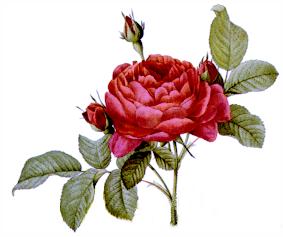
The Rose

The Rose

The rose is a perennial flower shrub or vine of the genus rosa. It belongs to the family rosaceae, that contains over 100 species and comes in a variety of colours. The rose is the best presentation that a lover can make to his / her loved one.

I CAN still vividly recollect the rose bud tucked delicately in the third button of Prime Minister Nehru’s sherwani. I can still remember Dr Zakir Hussain enjoying the stroll on the copses of Jamia Millia and often sitting near the rose shrubs admiring the beauty of the king of flowers – the rose.

In today’s world which is permeated with hatred, deceit, immoral politics, deception and ‘Sach Ka Samna’s, we have forgotten to listen to the melodies of the koyel sitting on the jamun tree; we have forgotten to admire the golden showers of the amaltas in our backyard that makes summers beautiful and the tea rose shrub we had purchased when we last visited the ‘Garden of Five Senses’ at Mehrauli. We have become indifferent to the earthen jar in which we had put the cute plant and placed it at a vantage point near the window and which now produces a few rose buds despite our neglect.

Let us forget all about our vice and talk about beauty today. As some poet had said – a flower that blooms for just a day is better than oak tree that stands for a hundred years and fails to provide even proper shade. Just look at a blooming rose and you forget, for a moment, all your worries. A rose is a perennial flower shrub or vine of the genus rosa. It belongs to the family rosaceae, that has over 100 species and comes in a variety of colours. Their species are average shrubs and climbers which can reach heights of up to 20m. Their stems are usually armed with sharp thorns. Thorns are modified branches or stems, whereas these sharp protrusions on a rose are modified epidermal tissues (prickles). Most rose species are native to Asia, with smaller numbers of species native to Europe, North America and Northwest Africa. Species from different parts of the world easily hybridise, which has given rise to the many types of garden roses.

The name rose comes from French, itself from Latin, rosa, which was borrowed from Oscan, from Greek rhodion (Aeolic wrodion), from the old Persian word ‘flower’. The steam-extracted essential oil from rose flowers has been used in perfumes for centuries. Rose water, made from the rose oil, is widely used in India, Iran and Arab countries in many cuisine. Selective rose petals are dried and made into marmalade popularly known as gulqand. Dried petals are brewed for tea, primarily for their high vitamin C content.

The rose is the best presentation that a lover could give to his/her loved one. Everyone, who has a heart, has some fond memories of roses. As one Hindi poet said – “Mujhe tod lena ban mali dena us path par tu phek, matra bhoomi par paran charrhane jis per jayen veer anek.” They say- “Beauty lies in the eyes of beholder.” The rose doesn’t need any beholder as the English poet Sarah Wilson Middleton wrote in the poem the ‘The wayside rose’:
Out on the old highway it grows,

Naim Naqvi

Naim Naqvi

Did his graduation in Science discipline from AMU in 1972-73. He was Secretary of University Ali Society in 1970 and M.M. Hall Literary Society in early 70 's and member of Tayyabji Literary Society. Did his Diploma in Bakery Administration from HTT College Oxford Street London in 1987. Worked with National Herald - Delhi, Blitz - Bombay as Trainee Journalist and in Production Department with 'Naya Sansar Pictures' of Khwaja Ahmed Abbas at Bombay in early 70's. Traveled for study and training purposes to Germany, U.K., Switzerland, France, Dubai, Oman, AbuDhabi, Bahrain and Philepines.

More Posts

Forget me not, my alma mater

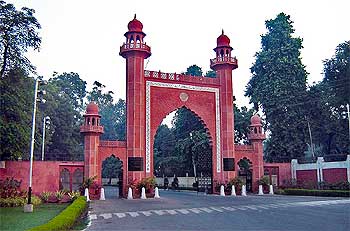
Aligarh Muslim University

Aligarh Muslim University

On our way, my guide and friend, who had himself been a student of AMU, had narrated umpteen stories about the campus, its romance, its mysteries and its elegance. It was becoming almost impossible for me to sit in patience.

NEITHER am I going to tax the reader with the history of “Aligarh Tehreek” that rejuvenated the Muslims of the sub-continent nor is it my intention to pay my tributes to “Baba-Ey-Qoum” Sir Syed Ahmed Khan, a towering personality whose vision and foresight has changed the destiny of a trampled race. I’m a selfish chronicler and my thoughts would swirl around the sweet and sour memories of my own wonderful and formative period that was spent in this prestigious and renowned institution – Aligarh Muslim University.

More than four decades back, on a sweltering midnight, passing ‘Katpula Bridge’, trundling past the sacred shrine of ‘Baba Barchi Bhahdur’ a train came to a screeching halt at Aligarh Station. There was the usual cacophony of coolies, the commotion of disembarking passengers and the cries of chaye chaye chaye (tea). I was one among the restive people. I can still vividly recollect the new beginning of life that gave me a new direction.

On our way, in the train, my guide and friend, who himself was a student of AMU, had narrated umpteen stories about the campus, its romance, its mysteries and its elegance. It was becoming almost impossible for me to sit in patience. Every minute was hard to pass. I just wanted to see the magnificent buildings, the shimmering pools, the velvety grass and the fronds of palm trees that danced in the air like the ears of elephants.

I wanted to see the ’Union Hall’ where the future leaders of the country would deliver extempore speeches upon any topic under the sun and the showers of enlightenment would continue for hours and hours. I wanted to see the broken ‘Burj’ of the ‘Central Mosque’ which was hit with a pavilion shot of Moustaque Mohammed, a cricket grand-master of yesteryears. I wanted to see the “Riding Club” where there were still the horses from the stable of Nawab Raza Ali Khan of Rampur.

I wanted to see the handwritten Quran, in Kufi Script, by the fourth Caliph and the first Imam of Muslims Hazrat Ali. To attend the University Convocation and the birthday of Imam Ali, the twin functions celebrated with great fanfare at the campus and visit the house of the founder and also pay my tribute to one of the greatest stalwarts of Islamic history – Sir Syed Ahmed Khan.

It was my first exploration with the baggage of history and curiosity. Coming out of the station we took a rickshaw and so began the pilgrimage to my beloved alma mater. We passed the ‘Clock Tower’, ‘Government Press’, ‘Tibbiya College’ – a place to which Hakim Ajmal Khan was emotionally attached, “Naqvi Park’ – still a Naqvi Park for the University though the government changed its names several times, Lal Diggi – a pond drowned in mysteries and stories about bhoots and parees, Phoons Ka Bangla – a natural towering hut covered with straw and straw alone which was cooler inside than present day air-conditioners. And finally we arrived at ‘Faiz Gate”.

It is said that this gate originally belonged to some fort gate of a Nawab and he had donated it to the University. The stones were brought piece-by-piece from the ruins of a far-away fort and assembled here in exactly the pattern as it was in the original scheme. The gate was never used as a gate and today it stands as a sentinel to the tremendous progress the university had made in all these years. The gate is still closed. They have recently built another main gate nearby known as ’Bab-e-Syed’ a real grandiose structure, a new attraction.

More than four decades rolled by. I’m an old man today. My younger daughter was recently admitted to the graduate course. A third generation of Aligarian in my family is registering her name at the university. She is going to walk on the stones and pavement that have forgotten my footsteps. They say – Dharti maa remembers and recognises every stroller’s step. Maybe it is true but there is no one here who recognises me. I leave my daughter in the admission hall and walk down to the hostel which was once ‘Zia Uddin Hostel’ now renamed as ’Shibli Hostel’. I stand before my room. The room is locked.

Present inmates have gone somewhere. For a moment, time has frozen. This visit has stirred up old memories. Nostalgia starts to flow. It was once a place where I had enjoyed the best years of my life. Today no one here knows me. Time and tide waits for noone. I pick up some soil beneath the Amaltas tree that had grown like me. It was a sapling planted by Garib Shah – our gardener when we were freshers. The koel could still be there somewhere but it is silent at the moment. I put the soil in my pocket without any bag or paper.

Only one thing comes to my mind – where are those days which I can’t see but which I clearly feel right here right now.

“Where are the songs of spring? Ay, where are they?
Think not of them, thou hast thy music too
While barred clouds bloom the soft-dying day,
The redbreast whistles from a garden – croft,
And gathering swallows twitter in the skies.”

Naim Naqvi

Naim Naqvi

Did his graduation in Science discipline from AMU in 1972-73. He was Secretary of University Ali Society in 1970 and M.M. Hall Literary Society in early 70 's and member of Tayyabji Literary Society. Did his Diploma in Bakery Administration from HTT College Oxford Street London in 1987. Worked with National Herald - Delhi, Blitz - Bombay as Trainee Journalist and in Production Department with 'Naya Sansar Pictures' of Khwaja Ahmed Abbas at Bombay in early 70's. Traveled for study and training purposes to Germany, U.K., Switzerland, France, Dubai, Oman, AbuDhabi, Bahrain and Philepines.

More Posts